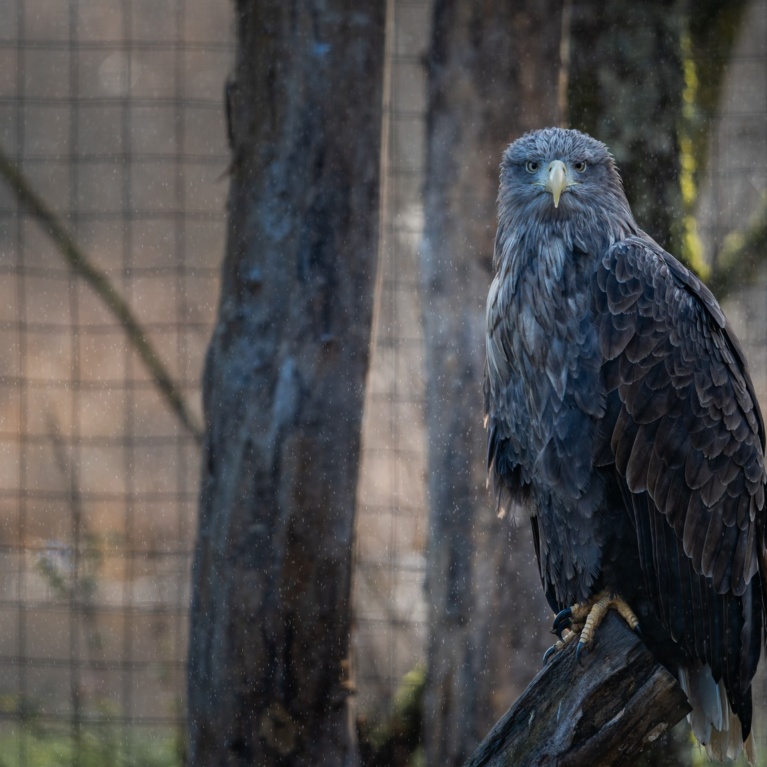
Bald Eagle
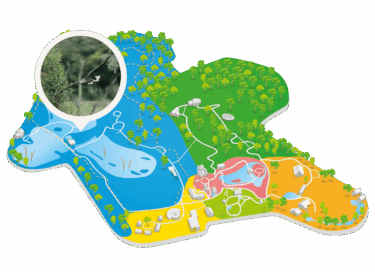
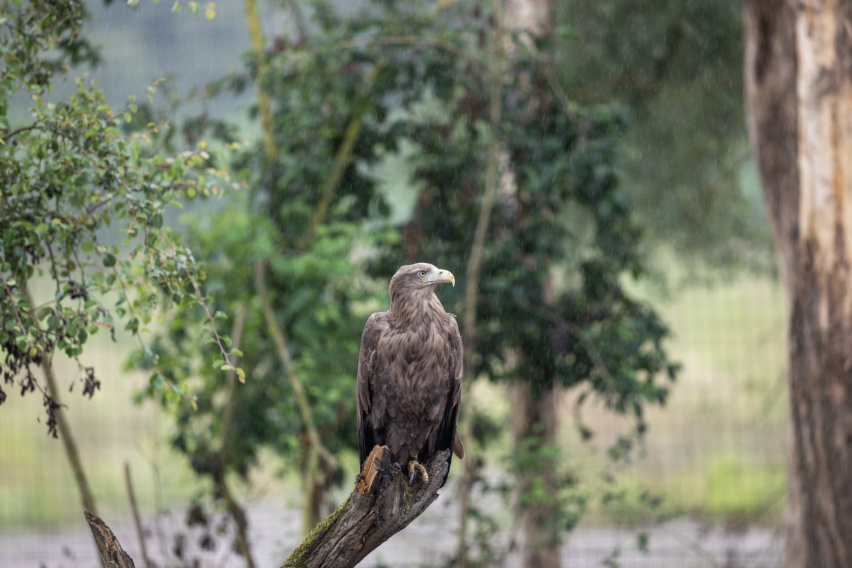
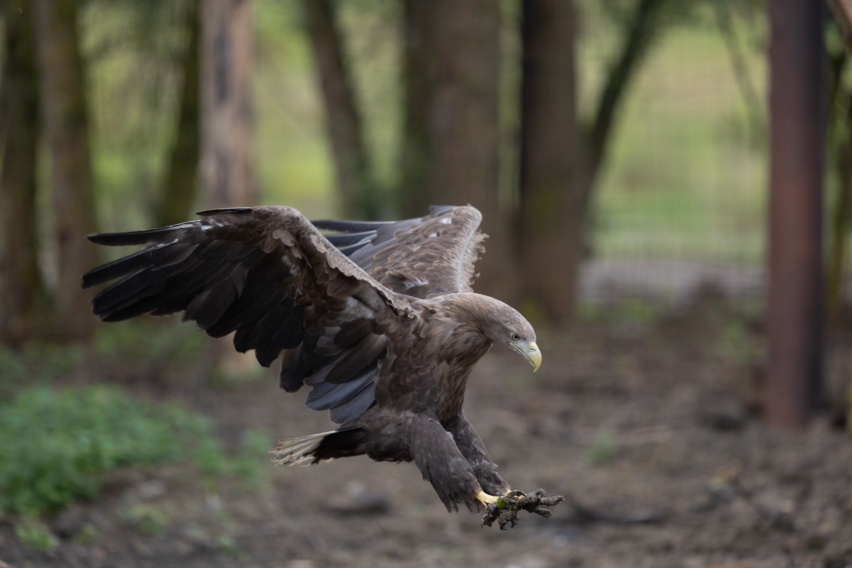
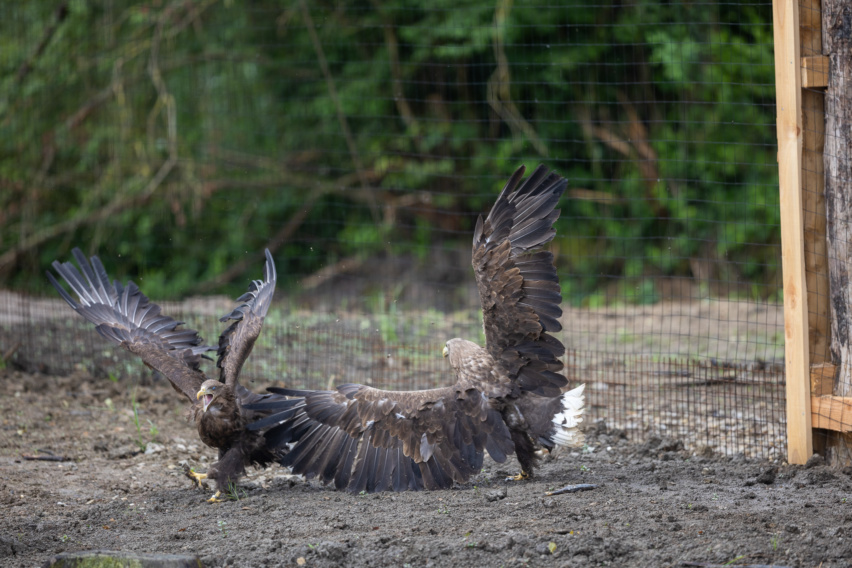
In 2024, a pair of white-tailed eagles joined Sainte-Croix Park. Meet Toundra, the female born in 2013 at Puy du Fou, and Bolchoï, the male born in 2016 in the Netherlands! They were introduced to each other in 2022 and are now at the park in the hope that they will breed. Subsequently, the young eagles can then be released into their natural habitat to participate in the Lake Geneva Eagles reintroduction program.
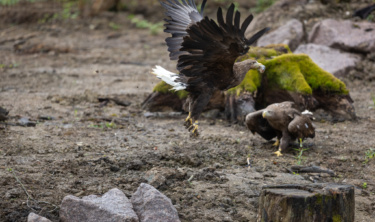
Europe’s largest bird of prey
Majestic and powerful, the white-tailed eagle commands attention with its imposing wingspan and piercing gaze. A true king of lakes and cliffs, this iconic bird of prey is a symbol of nature’s wild spirit.
A close cousin of the bald eagle (the emblem of the United States), the white-tailed eagle is one of Europe’s largest diurnal raptors, with a wingspan of up to 250 meters. It is easily recognizable by its massive silhouette and wedge-shaped white tail.
IUCN status
The International Union for Conservation of Nature’s Red List of Threatened Species (IUCN)
Description
Haliaeetus albicilla
Accipitridae
3 to 7kg
70 to 90cm
Europe, Asia (coastal areas, lakes, rivers, estuaries)
Least Concern
30 year
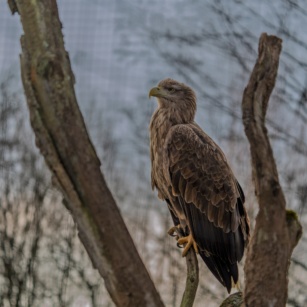
A spectacular return to Europe
Once threatened with extinction by hunting, poaching, and chemical pollutants, the white-tailed eagle has made a remarkable comeback thanks to conservation and reintroduction programs. It is gradually recolonizing Europe’s major lakes, deltas, and coastal areas.
Food
This large bird of prey feeds mainly on fish, waterfowl, and carrion. It can spot prey from over a kilometer away thanks to its keen eyesight. It is also known for stealing food from other birds!
Did you know?
It is nicknamed the “sea eagle” because of its habitat and its fish-based diet.