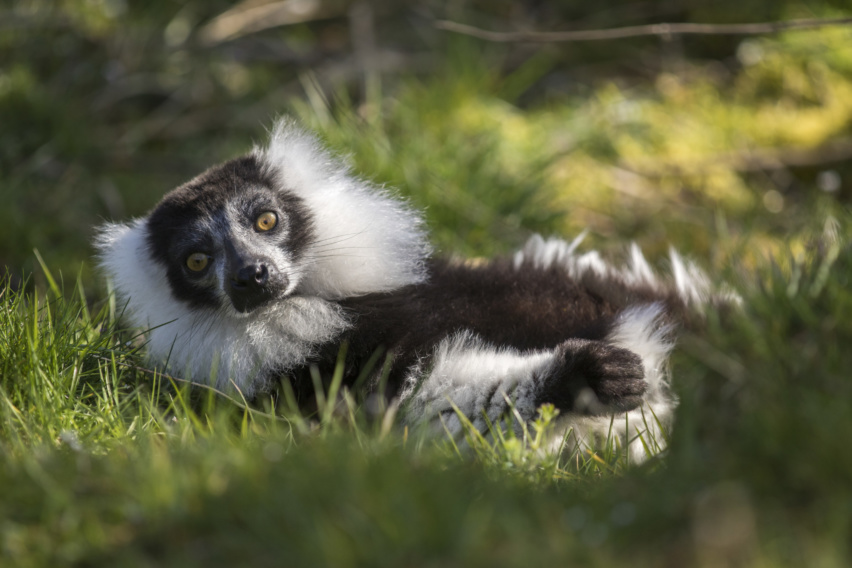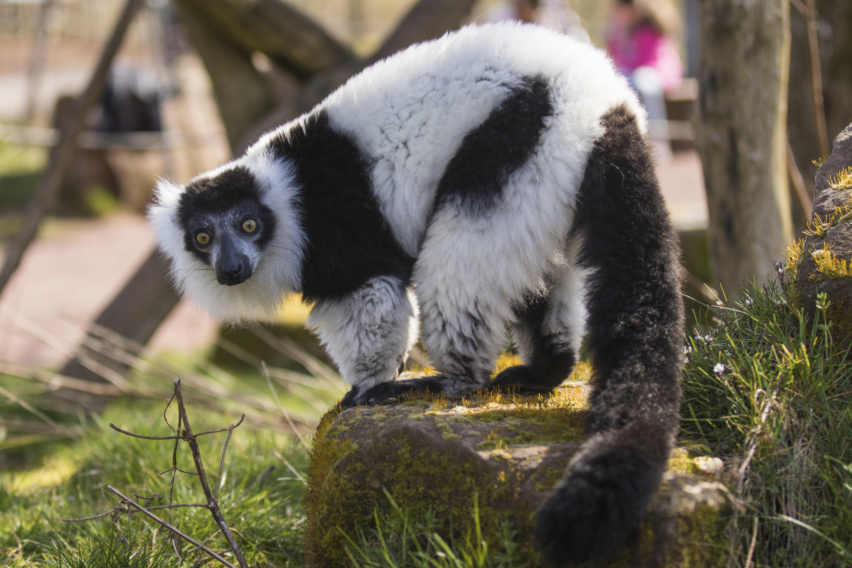
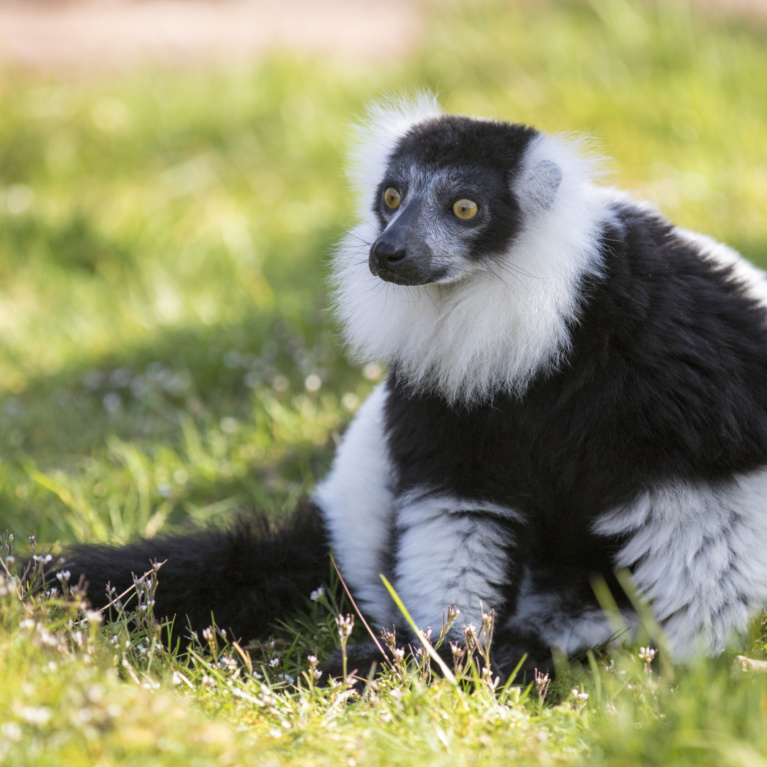
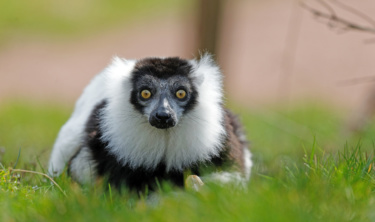
Black-and-white Vari
An excellent pollinator
These animals live in groups led by females. Members of a group communicate through loud calls.
After a gestation period of 102 days, the female gives birth to an average of two young, which are too weak to cling to their mother’s fur. Adults carry their young in their mouths, just as a cat would.
The black-and-white vari is very fond of the nectar found in the flowers of the traveler’s tree, Ravenala madagascariensis. As it feasts on the nectar, pollen settles on its fur, and it will carry it to its next meal, thereby helping to pollinate the tree.
IUCN status
The International Union for Conservation of Nature’s Red List of Threatened Species (IUCN)
Description
Varecia variegata
Lémur
About 5kg
body: 60 cm tail: 60 cm
Upper layers of rainforests
Critically Endangered
25 years in captivity / 15 years in the wild
Threats
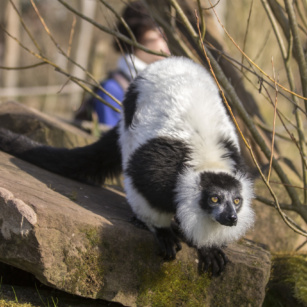
These endemic animals are found only in Madagascar, as is most of the island’s flora and fauna. Deforestation (driven by demand for exotic wood, slash-and-burn farming, etc.) and poaching are their main threats.
The park supports the AEECL and Help Simus associations in the conservation and protection of lemurs in Madagascar, and the NGO Anne-Marie, Sœur du monde in supporting local communities.
Did you know?
Varis give birth in a nest made of twigs and leaves, between 10 and 20 meters above the ground. The young are born completely blind.
Food
It feeds mainly on fruit, but also sometimes on seeds, leaves, flowers, buds, nectar, and honey.