Brown bear
The Mountain Giant
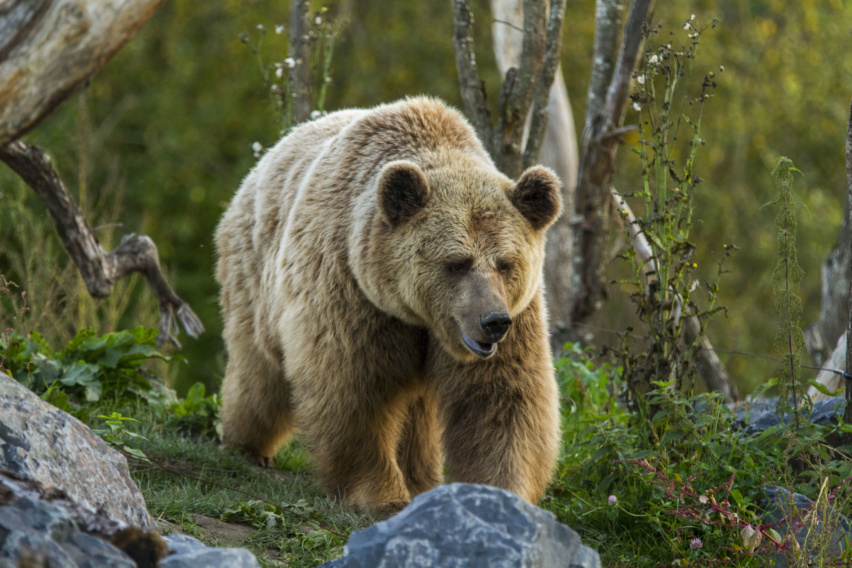
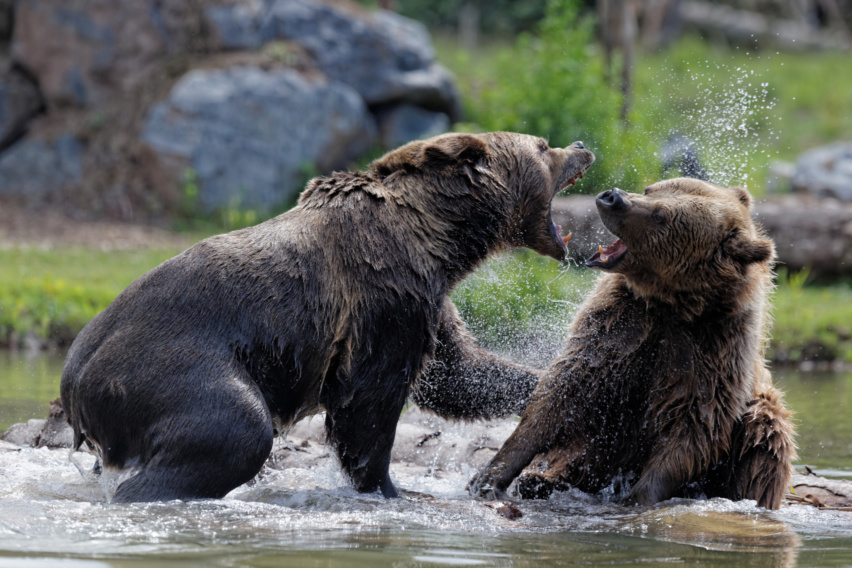
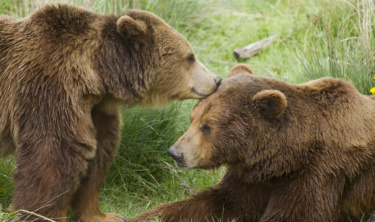
Despite its image as a clumsy, bulky animal, a bear can climb trees, is an excellent swimmer, and can reach speeds of 50 km/h!
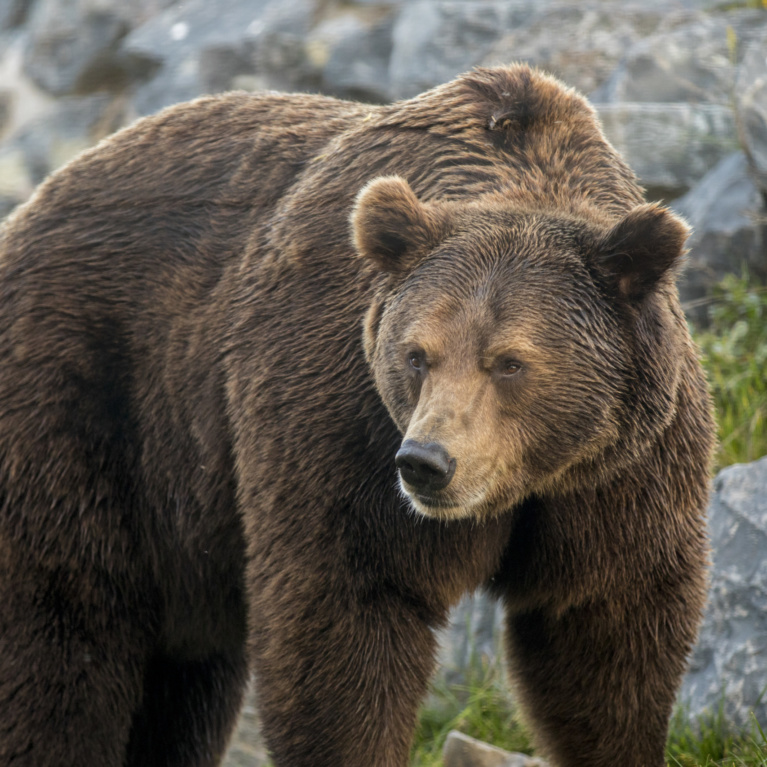
The brown bear is known for its long winter sleep. This lethargy isn’t really hibernation: its body temperature drops by only 4 to 5°C, and the animal can easily wake up. Brown bears are found throughout nearly the entire Northern Hemisphere.
The largest brown bears on the planet live on Kodiak Island in Alaska, where they can weigh up to 600 kg.
IUCN status
The International Union for Conservation of Nature’s Red List of Threatened Species (IUCN)
Description
Ursus arctos arctos
Ursidae
150 to 350kg
1,7 to 2m
Mountain forests
Least Concern
30 year

Did you know
Once widespread, the brown bear was hunted for a long time and driven out of its habitat by human activity. Brown bears are now found in France only in the Pyrenees. Since the remaining populations are too small, the species is the subject of a population restoration program. Thus, in 1996, the first brown bears, originating from Slovenia, were released into the Pyrenees.
Food
Its diet consists of 80% plant matter (berries, tender grasses, acorns, beechnuts, tubers, etc.) and 20% meat (mainly insects, small rodents, and carrion; it only occasionally hunts larger prey). It is an opportunistic animal that feeds on whatever is abundant in its environment.