
Chinese muntjac

From Asia to England
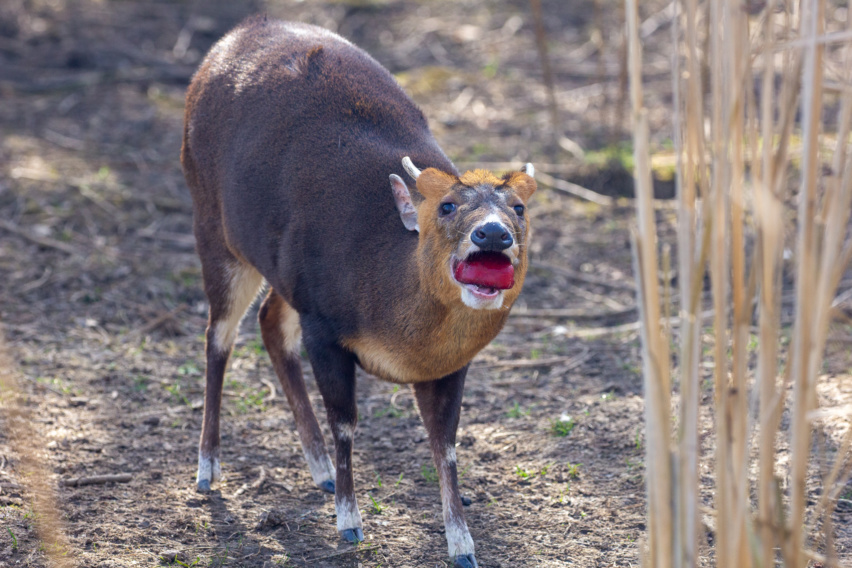
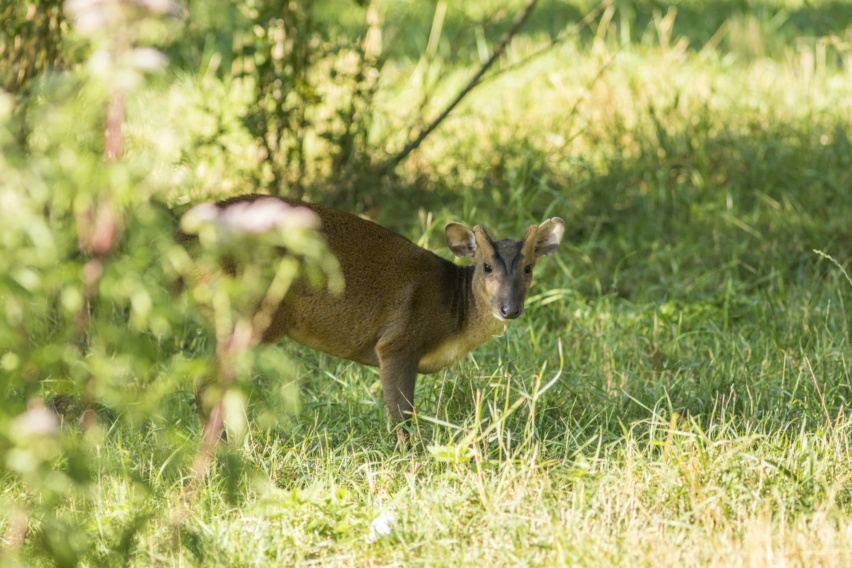
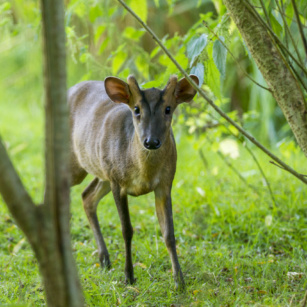
With a primitive appearance, the male has two short antlers supported by a very long tines. He has large canines used for fighting and to attract females. Equipped with prominent tear glands at the corners of its eyes, this deer marks all surfaces within its territory.
Unlike European deer, muntjacs breed year-round. The female muntjac reaches sexual maturity at 8 months. After a 7-month gestation period, she gives birth to a fawn, rarely two. She is receptive again just a few days later, so a female can produce 3 offspring every 2 years!
This species was introduced to England to populate the grounds of Woburn Abbey. Having escaped from there around the early 19th century and joined by other released or escaped specimens, this small Chinese deer eventually colonized central and southern England and then Wales.
IUCN status
The International Union for Conservation of Nature’s Red List of Threatened Species (IUCN)
Description
Muntiacus reevesi
Deer
12 to 17kg
40 to 50cm
Rainforests of South Asia and the United Kingdom
Least Concern
10 to 15 year
Did you know?
The Indian muntjac is the mammal with the fewest chromosomes—only three pairs! Surprisingly, it is a very close relative of the Chinese muntjac, which has 23 pairs, just like humans.
Food
It feeds mainly on leaves, fruits, seeds, and buds.