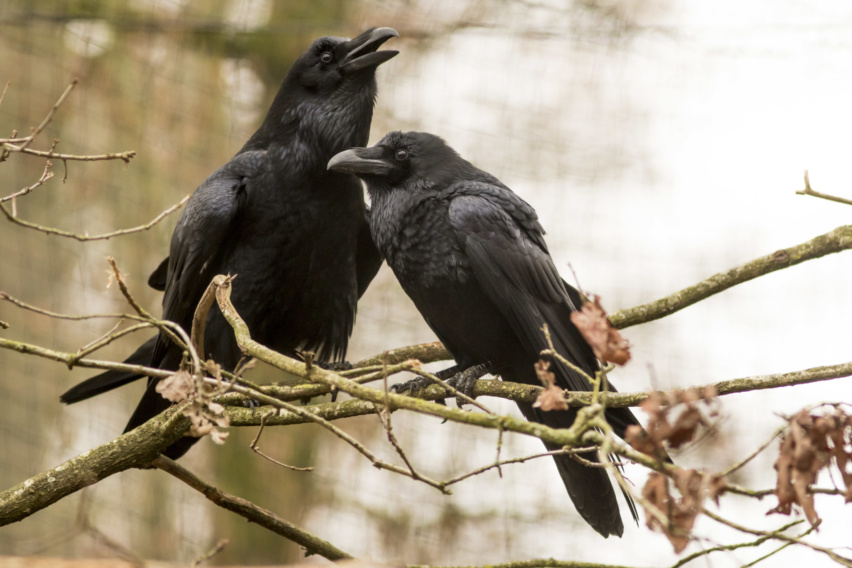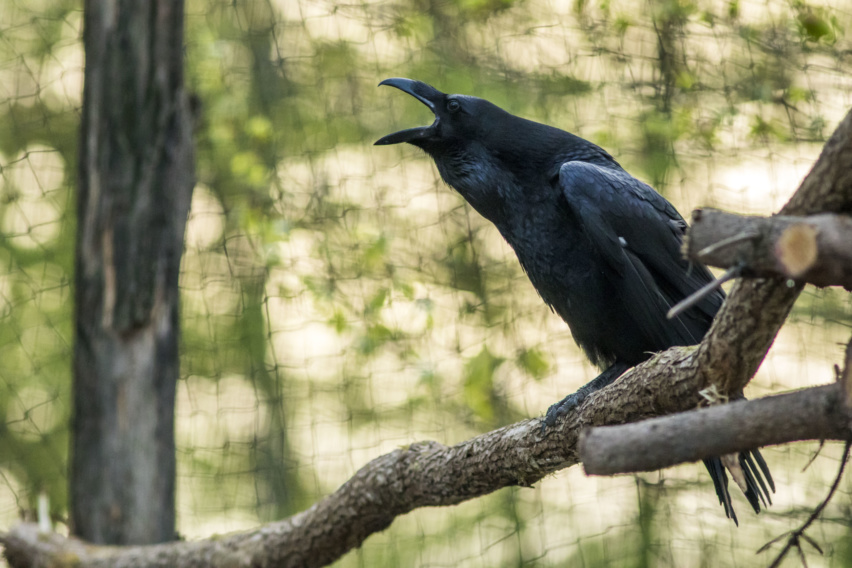
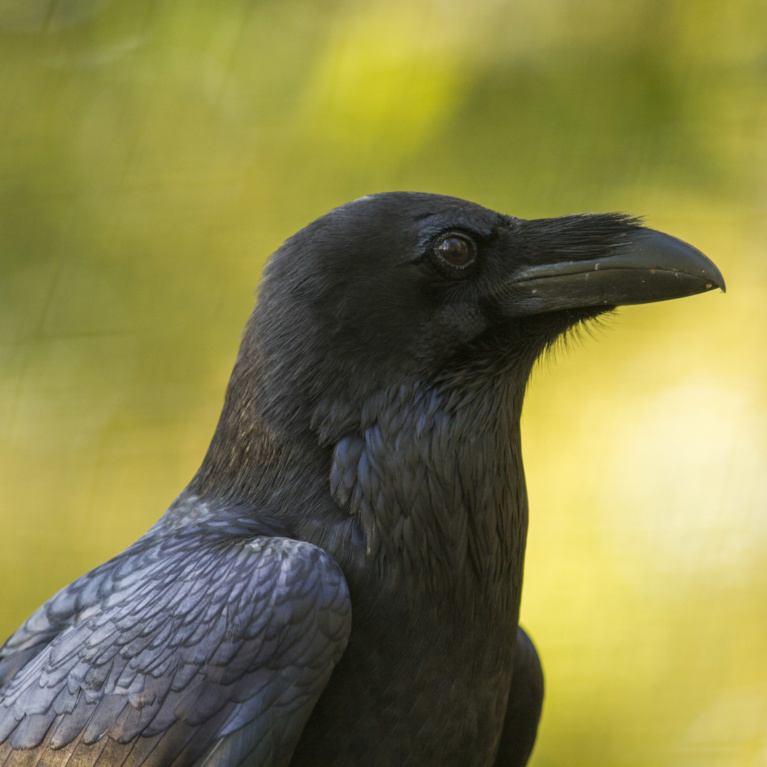
Common raven
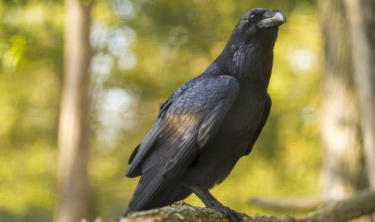
The world’s largest passerine
It can be distinguished from the crow by its large size, sturdier beak, and diamond-shaped tail. With its exceptional adaptability, it can thrive in a wide variety of habitats: cliffs, mountains, open forests, plains, and even near urban areas.
It lives in monogamous pairs. Starting in January, both parents build a nest, usually at high altitudes, up to 3,000 meters. Generally, the pair chooses a location that is difficult to access.
Corvids possess remarkable intelligence. They are capable of using tools or solving problems considered very complex for other birds.
IUCN status
The International Union for Conservation of Nature’s Red List of Threatened Species (IUCN)
Description
Corvus corax
Corvids
700g to 1,6kg
55 to 70cm
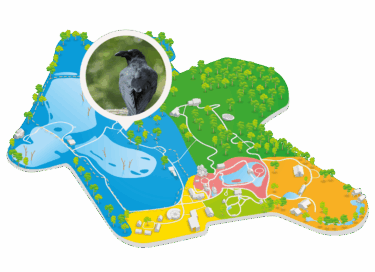
Mountainous areas
Least Concern
10 to 15 years
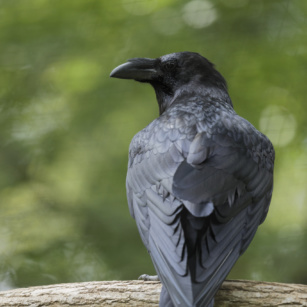
Did you know?
In the past, farmers would capture ravens from their nests and tame them. The birds remained loyal to their owners. Ravens are skilled mimics; they can imitate the calls of other birds and even repeat certain words.
Food
It feeds in many different ways: on carrion, small mammals, and reptiles, as well as nuts, fruits, and buds. Anything it can get its beak on.