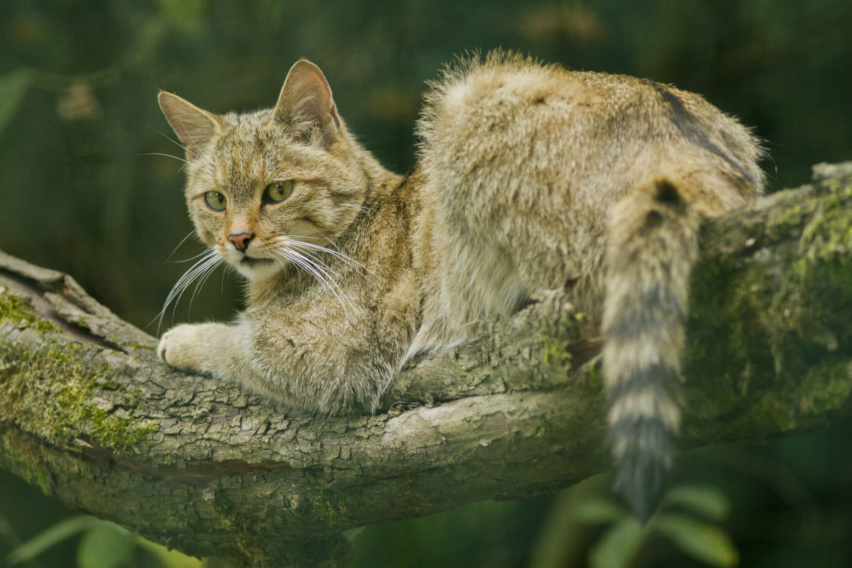

Forest cat
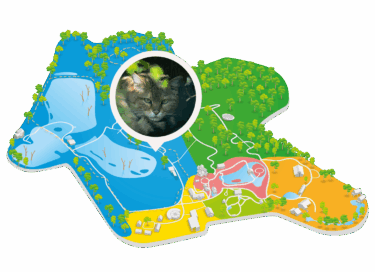
Take your time observing this feline on the park’s blue trail, which is dedicated to European animals.
Protection of the forest cat
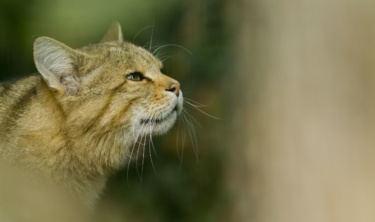
Once hunted for its fur and because it was believed to be dangerous, the wildcat is now a protected species. Deforestation has also contributed to the decline of the species.
Since the implementation of protection measures, wildcat populations have been reclaiming regions where they once lived.
IUCN status
The International Union for Conservation of Nature’s Red List of Threatened Species (IUCN)
Description
Felis silvestris silvestris
Felines
4 to 5 kg
50 to 70 cm
Forest and meadow habitats
Least Concern
10 years
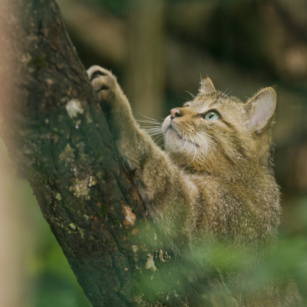
Resemblance to the domestic cat
It can be confused with the feral domestic cat, known as the “haret.” It closely resembles the domestic cat, although the latter is native to Africa, whereas the wildcat has always lived in Europe.
Food
It usually goes out in search of food at dusk. It feeds on rodents, birds, and sometimes frogs, lizards, and insects.