Hairy heron
A heron with a surprising appearance
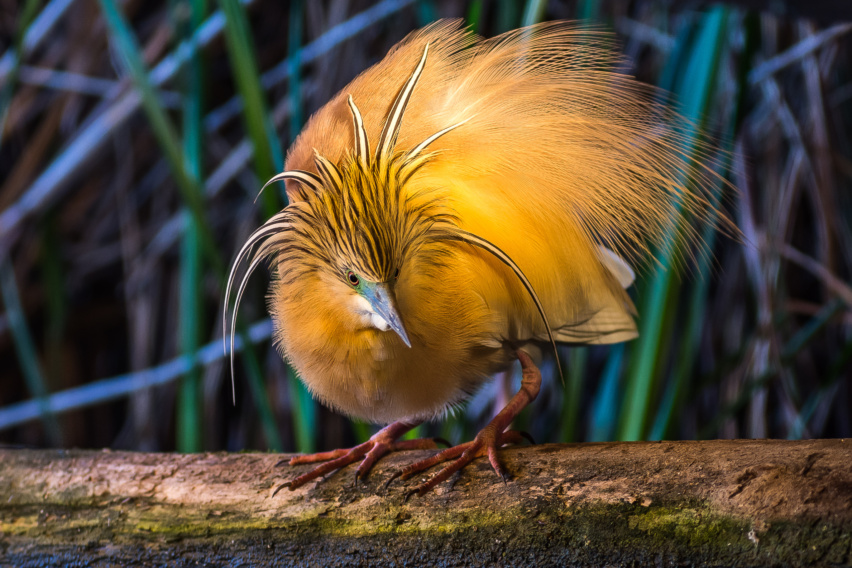
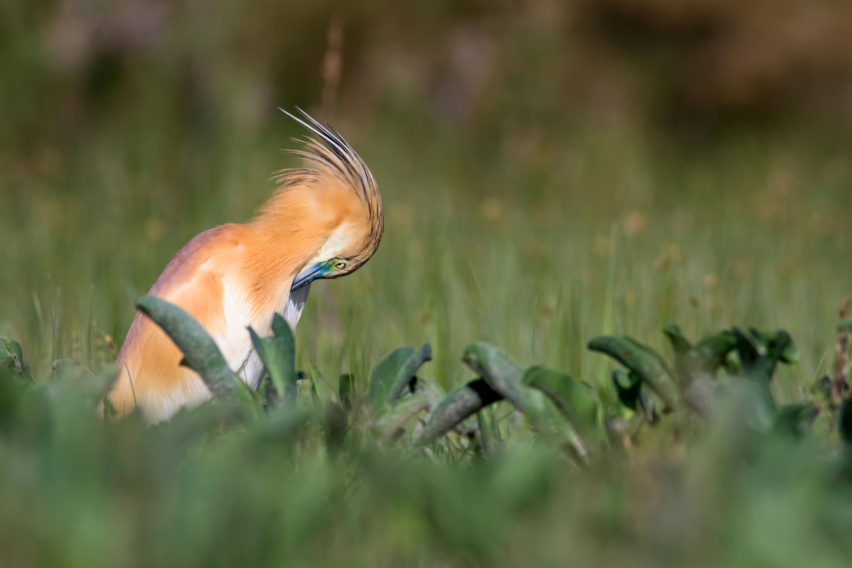
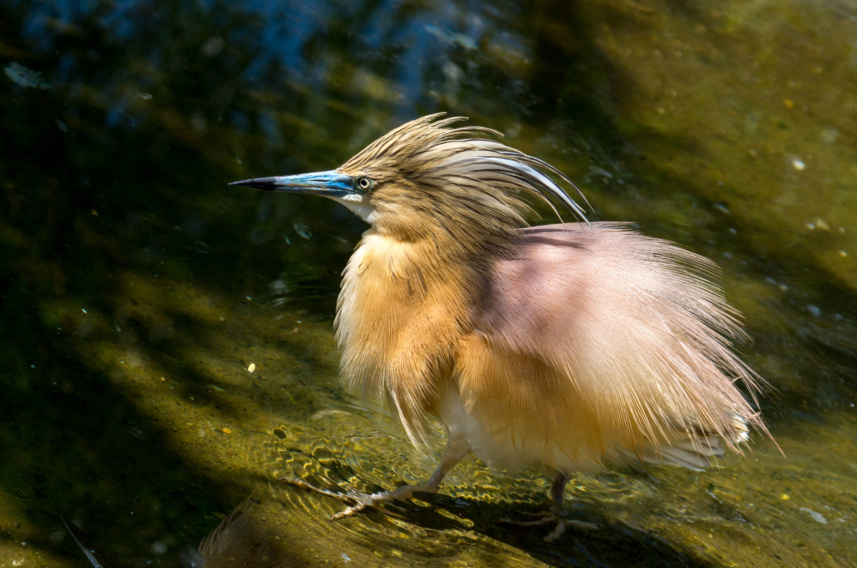
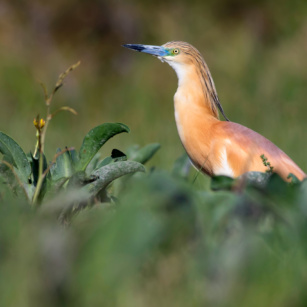
The squacco heron lives up to its name. During the breeding season, its head is adorned with long brown and white tufts that form a veritable “mane,” immediately distinguishing it from other herons.
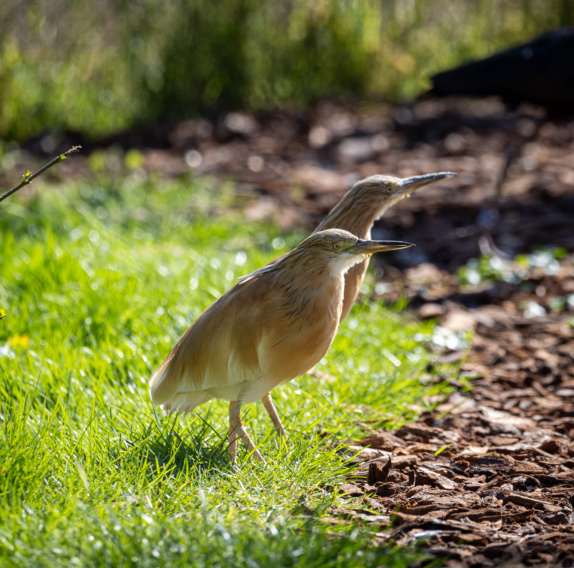
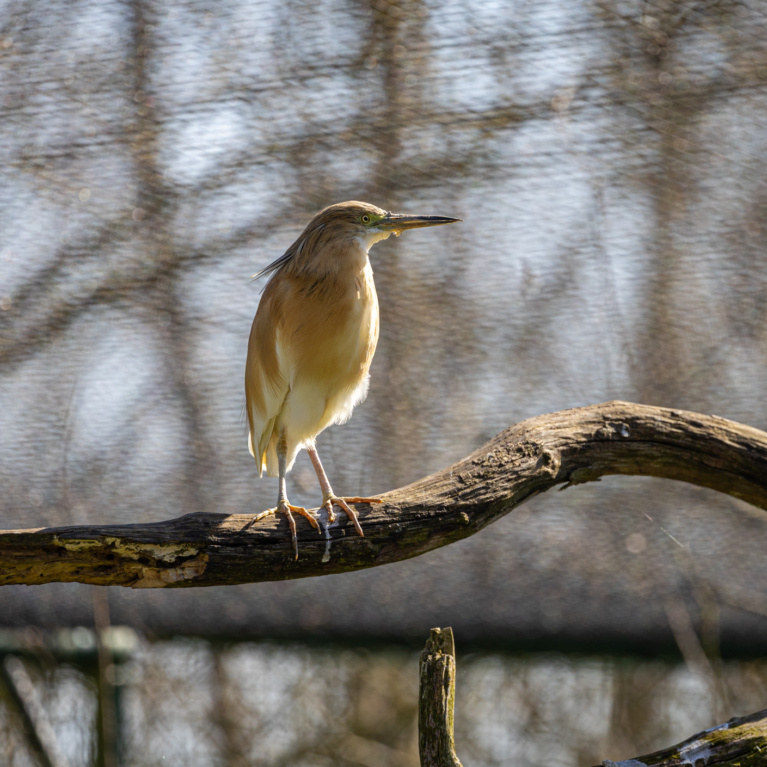
Its plumage ranges from fawn to light brown, perfect for blending into the reeds. Yet, the moment it takes flight, the surprise is complete. Its entirely white wings create a striking contrast that instantly catches the eye.
IUCN status
The International Union for Conservation of Nature’s Red List of Threatened Species (IUCN)
Description
Ardeola ralloides
Ardeidae
250 à 300 g
47 cm
Europe, Africa, and South America
Least Concern
11 years
Did you know?
The squacco heron particularly favors freshwater marshes or ponds with dense vegetation, which are areas rich in biodiversity.
It spends its time alongside other colonies, such as gray herons or egrets, which roost in willows, poplars, or thickets of reeds.
This bird is also a migrant. It returns to our regions around May and departs in August for tropical Africa, where it spends the winter.
Food
Although the bald ibis appears calm, it is nonetheless a skilled predator. Its diet consists mainly of frogs, small fish, aquatic insects, and their larvae.
These prey items make up the bulk of its diet, though it may also capture other small aquatic creatures.
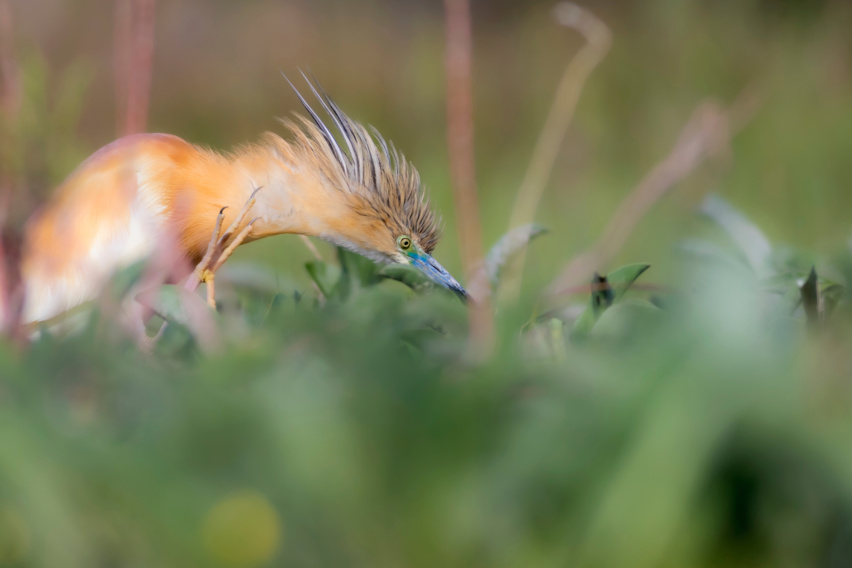
To hunt, it moves slowly through shallow water, sometimes remaining motionless for several seconds. Then, with a swift movement, it seizes its prey with a beak as precise as a pair of pliers.
Although fairly quiet, it makes itself heard in the evening or when startled, letting out a sharp cry.
Reproduction
The breeding season begins in May. The squacco heron builds a nest of twigs in trees or reeds, often surrounded by other species of herons.
The female lays 4 to 6 blue-green eggs, which are incubated for about 22 to 24 days. The young, still clumsy, remain in the nest for up to 45 days, sometimes venturing onto nearby branches before they learn to fly.
Juveniles can be recognized by their duller, streaked plumage, which is less uniform than that of adults.