Peacock
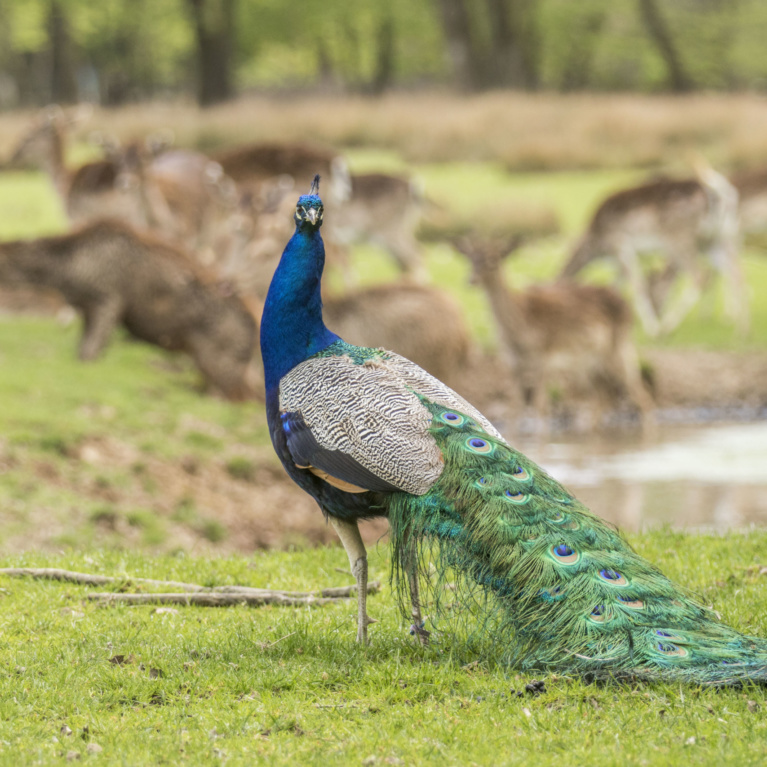
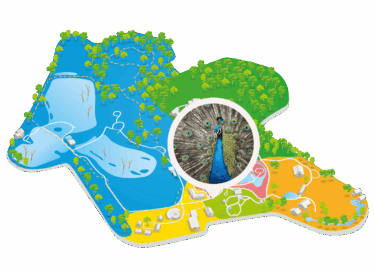
At Sainte-Croix Wildlife Park, the peacock roams freely, so you might spot it just about anywhere—whether near the enclosures, along the paths, or perched in a tree! Keep your eyes peeled… and listen carefully: its call never goes unnoticed.
A regal bird from the East
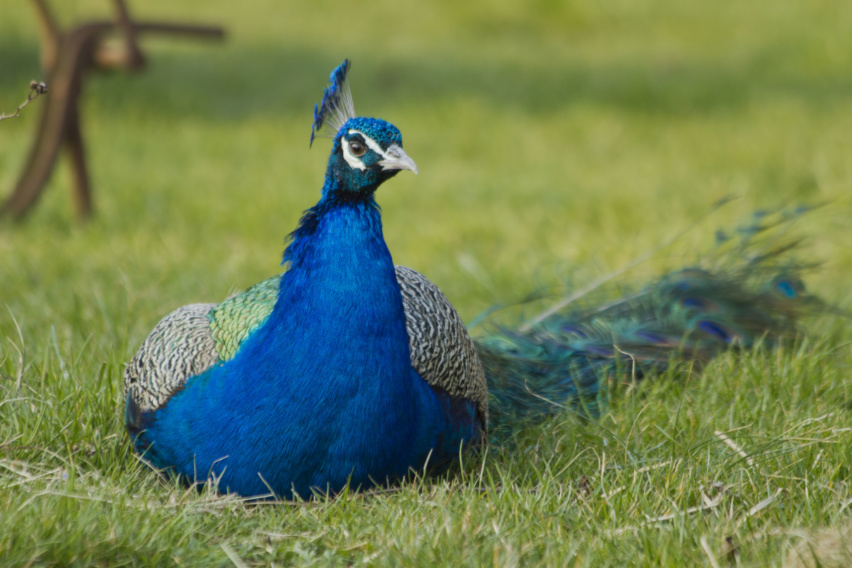
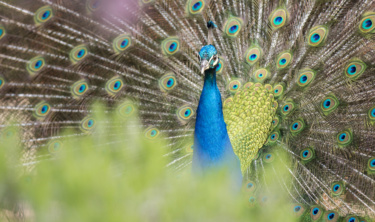
The blue peacock is one of the most recognizable birds in the world thanks to its magnificent, colorful tail. Native to the Indian subcontinent, it has long been associated with majesty, beauty, and royalty. It was introduced to Europe as early as ancient times, where it adorned the gardens of opulent palaces. Even today, it continues to fascinate with its elegant appearance and shimmering colors.
Description
Pavo cristatus
Phasianidae
4 to 6kg
up to 2.30 m long (including the trailer)
India and Sri Lanka
Least Concern
15 to 20 year
The male, the star of the show
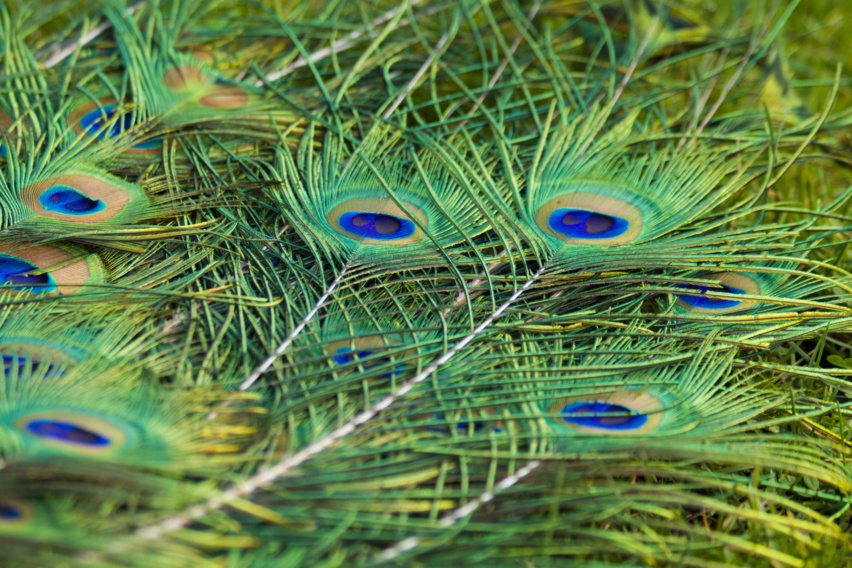
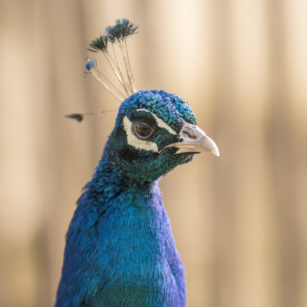
In peacocks, the male is far more spectacular than the female. His train, often mistakenly called a “tail,” consists of long feathers adorned with ocelli—those famous eye-shaped patterns. He can fan it out to attract females or intimidate rivals. In contrast, the female, known as a peahen, is brownish in color and more subdued. This difference in plumage is called sexual dimorphism.
Did you know?
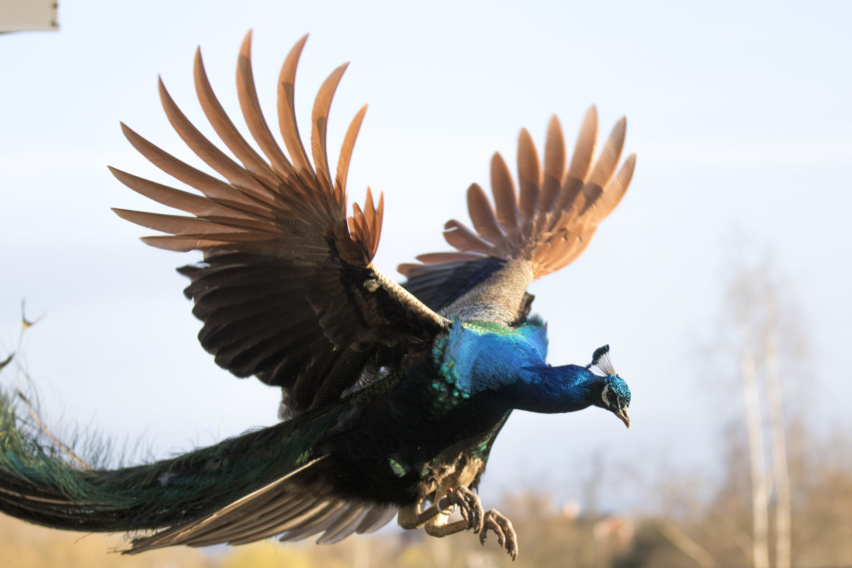
Although it spends most of its time on the ground, the peacock is capable of flying short distances. It takes flight to perch high up, particularly to sleep out of reach of predators. In places like the Sainte-Croix Wildlife Park, it likes to perch on rooftops or in trees. Be sure to look up.
Food
The peacock is an opportunistic omnivore. It feeds mainly on seeds, fruits, and leaves, but supplements its diet with small animals such as insects, worms, and even small reptiles. It scratches the ground with its beak in search of food, much like a chicken.