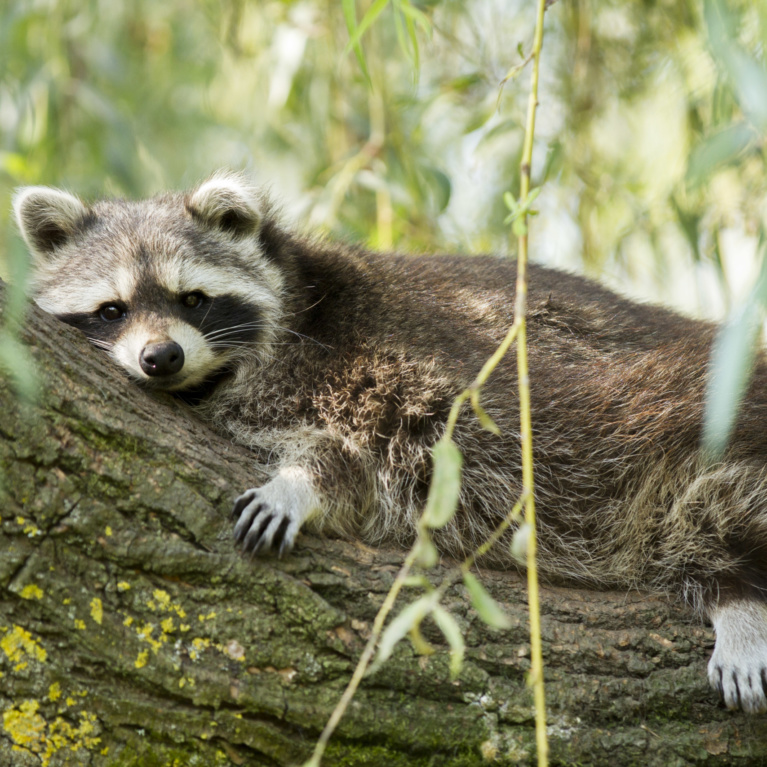
Raccoon
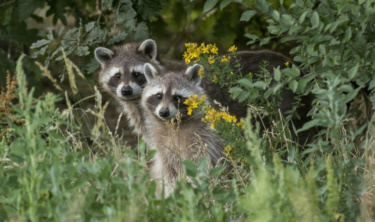
The Masked Bandit
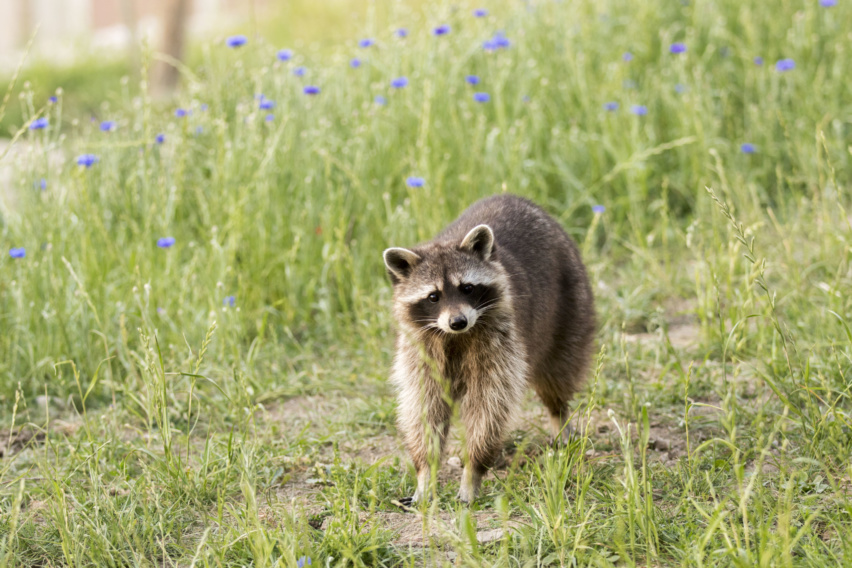
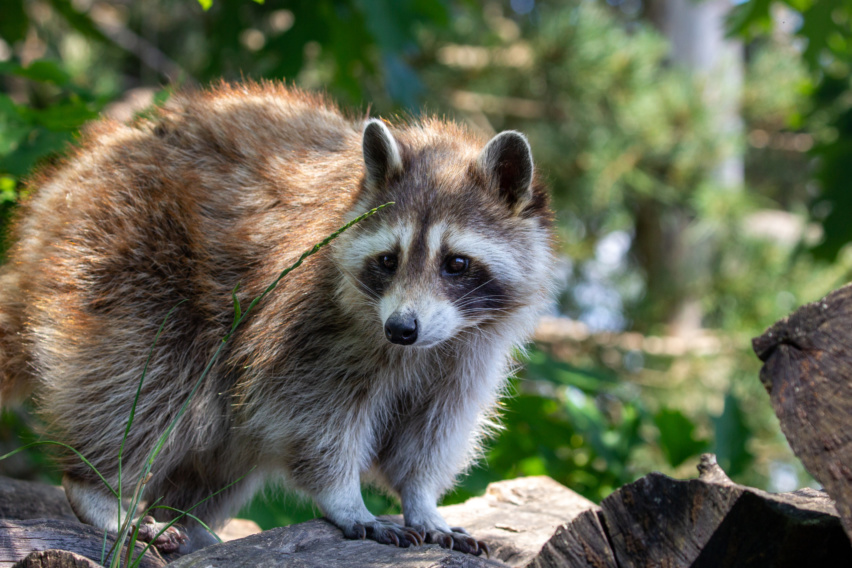
Many people see the black stripe on a raccoon’s face as a burglar’s mask! In urban areas, raccoons find an abundant food source in trash cans and, more generally, around homes, which they don’t hesitate to visit or even take over.
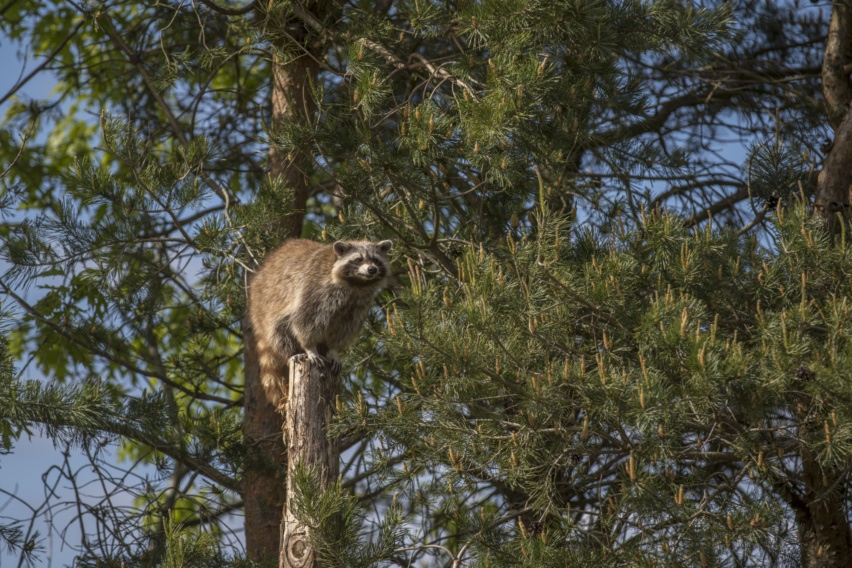
The popular belief that raccoons wash their food before eating it stems from their feeding behavior. It generally feeds on small aquatic animals and often rubs its food between its paws as if kneading it. Thus, piles of clam shells on the bank of a stream or broken stalks in cornfields are signs of its presence. Primarily nocturnal, it climbs trees with ease thanks to its nimble fingers and sharp claws.
IUCN status
The International Union for Conservation of Nature’s Red List of Threatened Species (IUCN)
Description
Procyon gloveralleni
Procyonidae
5 to 10kg
30 to 35cm
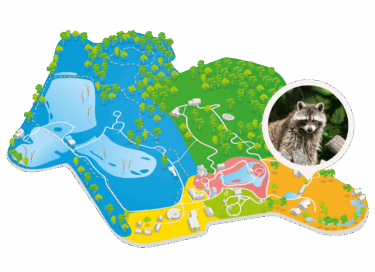
Forest areas near ponds and rivers
Least Concern
2 to 5 year
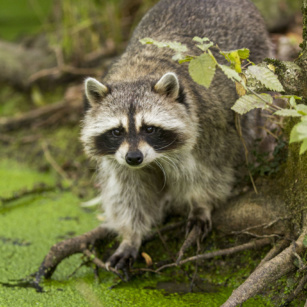
An American in Lorraine
Raccoons were introduced to Germany and France in the 1920s, during the heyday of the fur trade. As pets of American soldiers, some were released after NATO bases closed in the 1960s.
The raccoons found in northeastern France are descended from both the expanding French population in the Aisne region and the German population.
Did you know?
The English name “raccoon” comes from the Native American word “arakun,” which means “one who scratches with its hands.”
Food
As an omnivore, the raccoon eats whatever it can find: insects, eggs, rodents, fish, frogs, fruit, birds…