Red deer
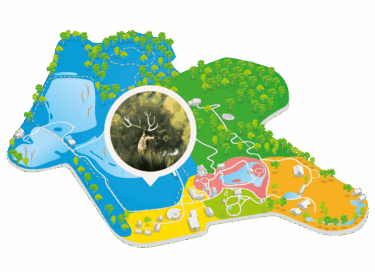
In an idyllic, unspoiled setting, watch deer roaming freely across dozens of acres of wilderness. They share the habitat with other deer species—fallow deer and mouflon—along the Blue Trail, which is dedicated to European wildlife.
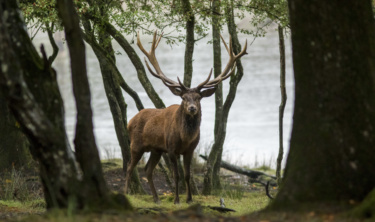
A creature of the plains
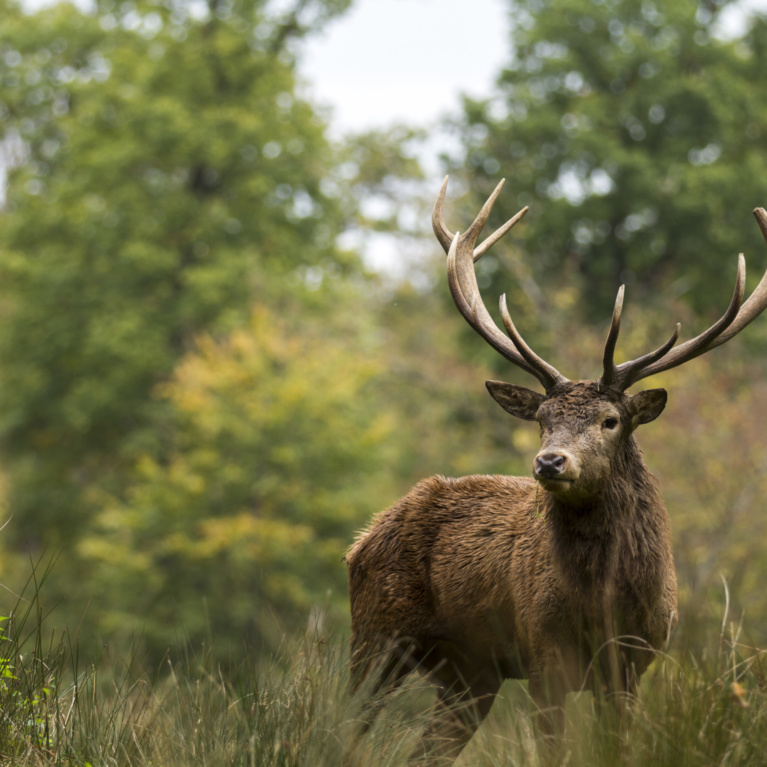
Originally, deer lived in open habitats (plains), as evidenced by their antlers, which are ill-suited to forest life. Today, due to human activities, deer can be found in all types of forests.
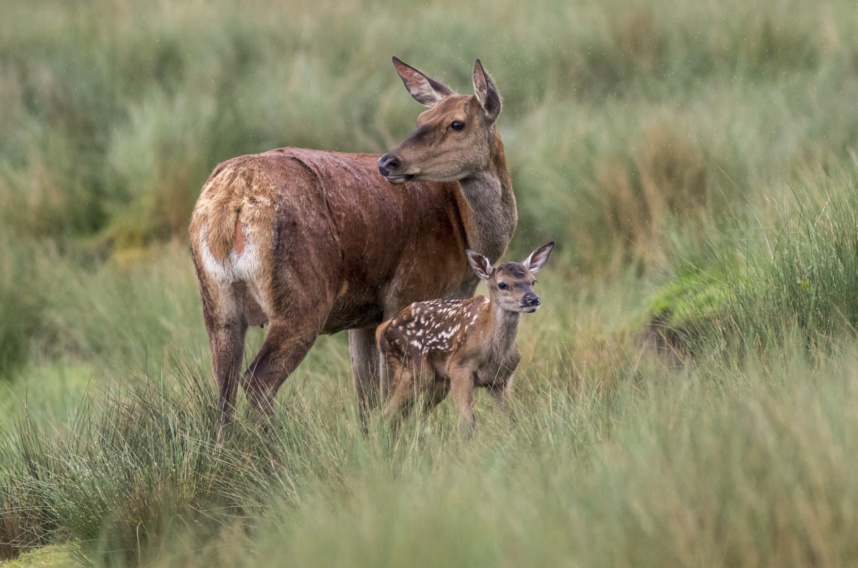
There are nearly 9,000 deer in Lorraine. Males and females live in separate herds and come together during the rutting season in the fall. Does give birth to their fawns in May and June.
The Corsican deer has gone extinct, but efforts are underway to introduce the Sardinian deer—which is very similar in its small size—to the island.
IUCN status
The International Union for Conservation of Nature’s Red List of Threatened Species (IUCN)
Description
Cervus elaphus
Deer
80 to 180 kg
1 m to 1.5 m
Forests of Europe
Least Concern
12 to 18 years old
Did you know?
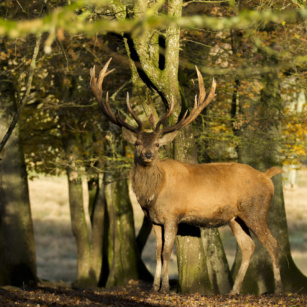
In France, it is the largest herbivore in our forests (following the extinction of the European bison, the aurochs, the wild horse, and the moose).
Food
It feeds on herbs and grasses, buds in the spring, and tree bark in the winter.
In the fall, the deer builds up fat reserves by eating beechnuts and acorns to prepare for the harsh season.