Red-sided gibbon
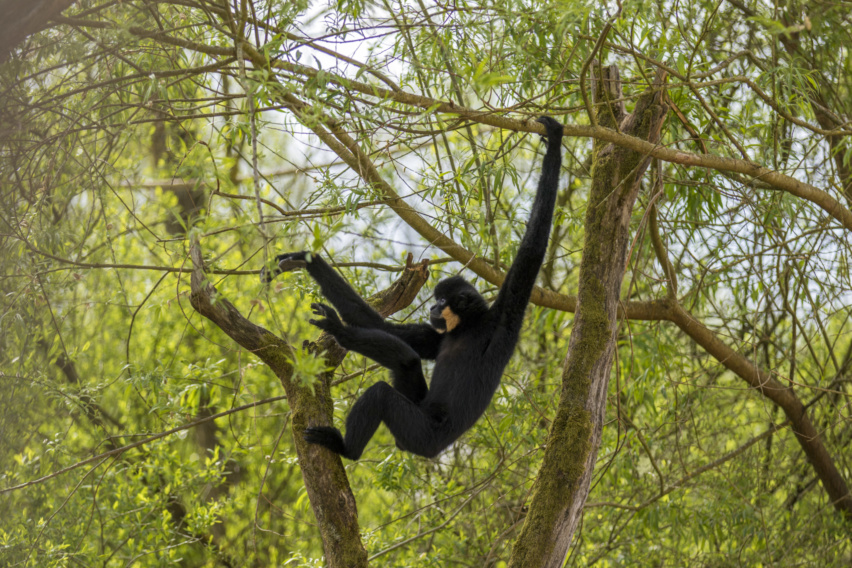
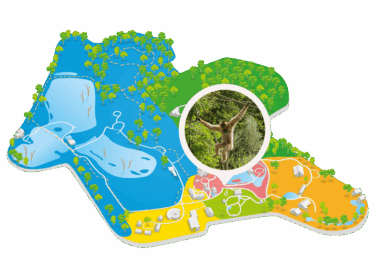
During Neo’s Journey: Biodiversity Mission, look up in the trees to spot the pair of gibbons.

The smallest of the great apes
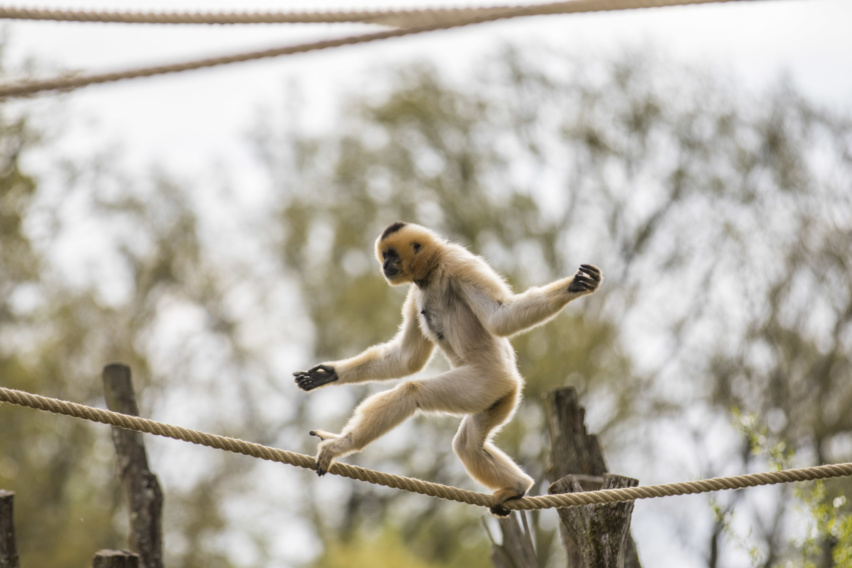
Gibbons are the smallest members of the great ape family. That doesn’t stop them from leaping 10 to 15 meters through the trees. They move from branch to branch using their long arms. Like all great apes, they have no tail.
Monogamous, the family typically consists of a pair and their young. The young remain with their parents until the age of 6–8 years, before leaving to establish their own territory and family. The female gives birth to a single young every 2 or 3 years, after a 7-month gestation period.
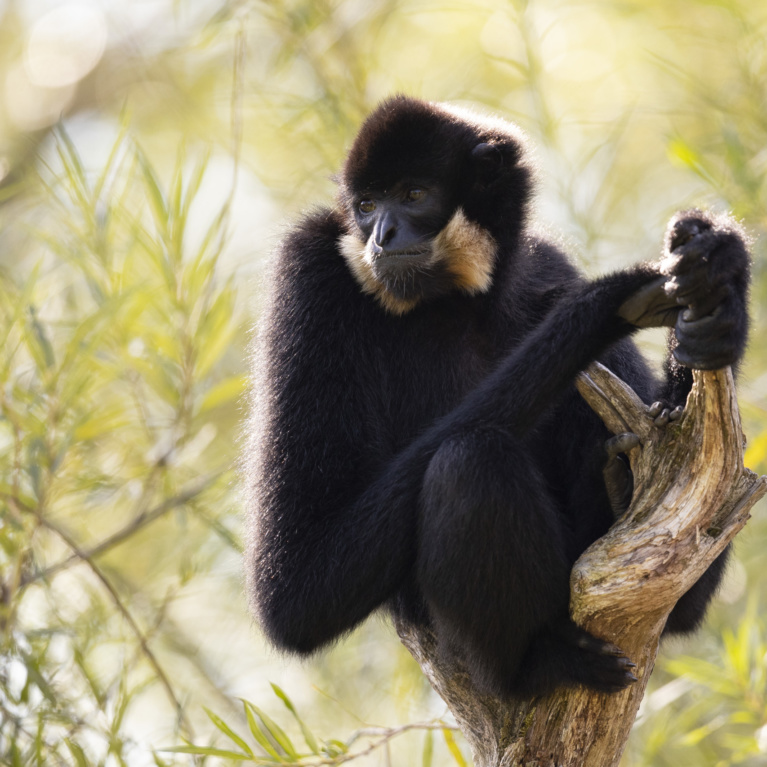
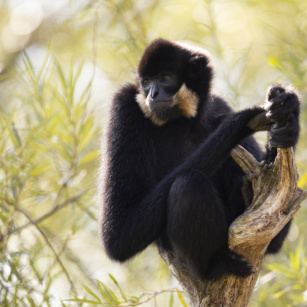
Red-faced gibbons exhibit significant sexual dimorphism. The female is recognizable by her cream-colored fur, while the black male has two bands of red hair on either side of his face, known as sideburns. At birth, all young are cream-colored (making them hard to spot on their mother’s belly); starting at 10 months, they begin to turn black with red sideburns, while females revert to cream as they reach maturity.
IUCN status
The International Union for Conservation of Nature’s Red List of Threatened Species (IUCN)
Description
Nomascus gabriellae
Hylobatidae
7 to 11kg
45 to 50cm
Tropical forests
Critically Endangered
50 years in captivity / 25 to 30 years in the wild
Did you know?
Their distinctive call, which can be heard from several kilometers away, allows them to mark their territory.
Like all gibbon species, they are threatened by habitat destruction and hunting for the illegal pet trade or traditional Asian medicine.
Food
It feeds mainly on fruit but may also eat a few leaves, flowers, or insects.