Turkey

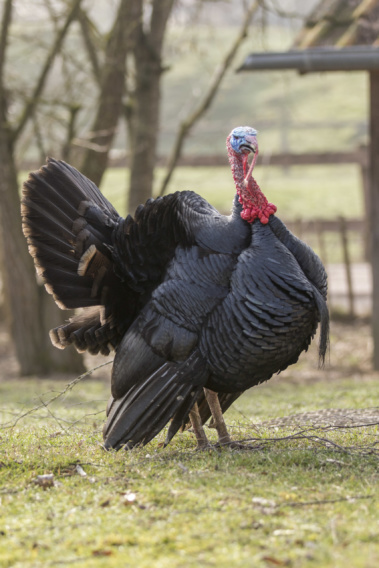
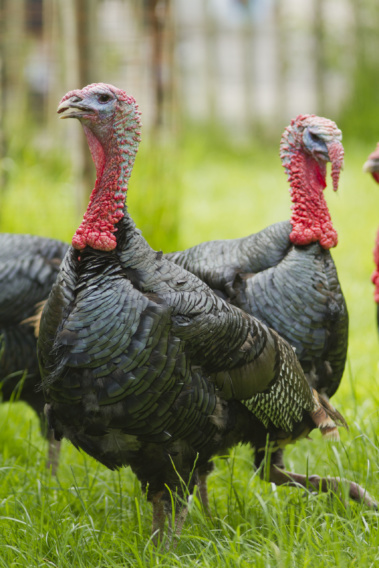
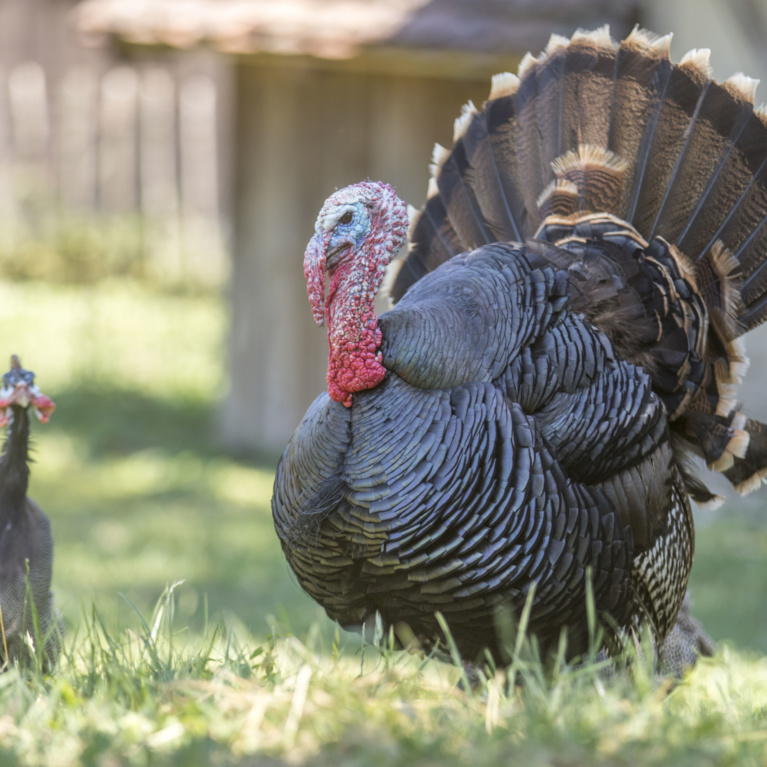
At the Sainte-Croix Wildlife Park, turkeys can be observed in enclosures set amid the natural landscape, where they roam freely. Visitors can watch them strutting about, foraging for food, or resting. It’s a fascinating sight, especially during the breeding season.
An imposing and fascinating bird
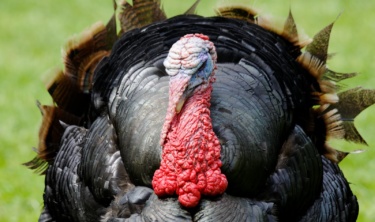
The turkey, also known as a female turkey, is a large and impressive bird, well known for its bright red crest and characteristic “gobbling.” Native to North America, this bird was domesticated by Native Americans long before the arrival of European settlers. Today, it is primarily raised for its meat, but it is also valued for its interesting characteristics and social behavior.
Description
Meleagris gallopavo
Pheasants
500 to 600 kg
about 125 cm
North America (domesticated in the United States and Mexico)
Least Concern
12 to 15 years
A distinctive look and vibrant colors
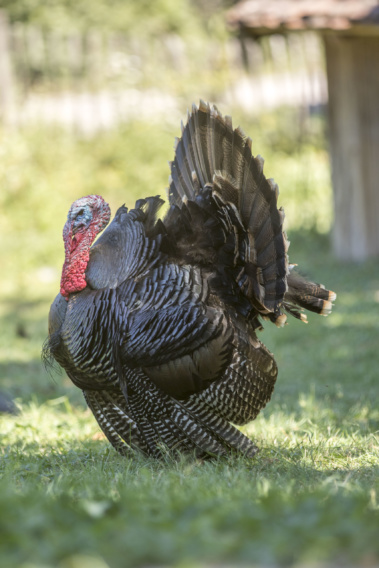
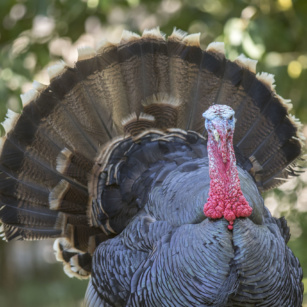
The turkey is distinguished by its often colorful and iridescent plumage, which can range from brown, red, blue, and green. The male is particularly adorned with a collar of metallic feathers around his neck and chest, and he has a red throat that he can puff out during courtship displays. He is easily recognizable thanks to the fleshy wattle on his beak, as well as his imposing gait.
Did you know?
Les mâles (dindons) sont célèbres pour leur Males (turkeys) are famous for their impressive courtship displays. They puff out their chests, spread their feathers, and make deep sounds to attract females.
Food
Turkeys are omnivores and have a varied diet. They eat grains, fruits, insects, and may even feed on small reptiles or amphibians. In captivity, they are fed mainly grains, vegetables, fruits, and table scraps. This balanced diet helps them stay healthy and active.