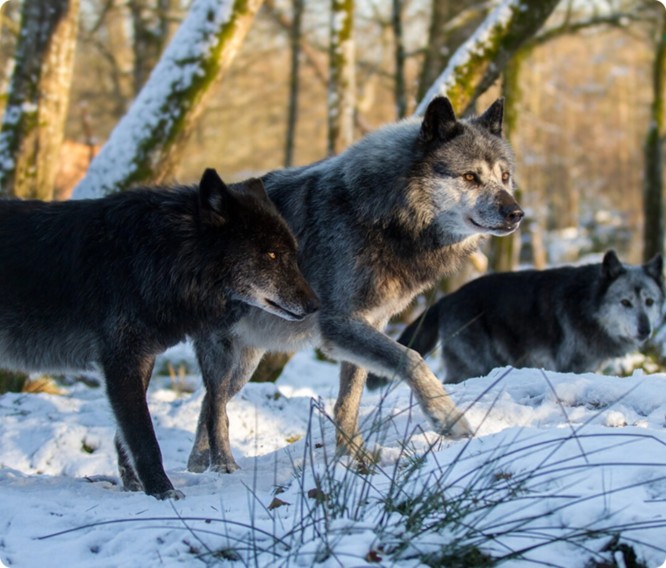
Western Canadian black wolf
Présents dans le mythique parc naturel nord américain « Yellowstone », une meute de loups « timberworlf » s’est installée au cœur du Parc Animalier de Sainte-Croix. De nombreux éléments muséographiques et scénographiques vous permettront de découvrir toutes les facettes de cet animal.
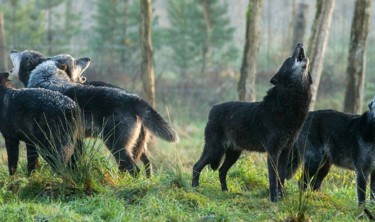
Our pack of Canadian wolves
In 2020, seven Canadian wolves from Givskud Zoo in Denmark arrived at Sainte-Croix Park. With the arrival of this new pack of wolves from Western Canada, the wildlife park is solidifying its position as a European leader in the presentation and education of this legendary animal.
IUCN status
The International Union for Conservation of Nature’s Red List of Threatened Species (IUCN)
Description
Canis lupus occidentalis
Canids
60 kg
80 cm at the withers
Coniferous forests
Least Concern
8 to 16 years in captivity
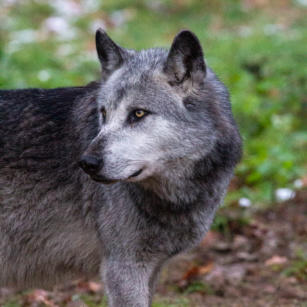
One of the largest wolves
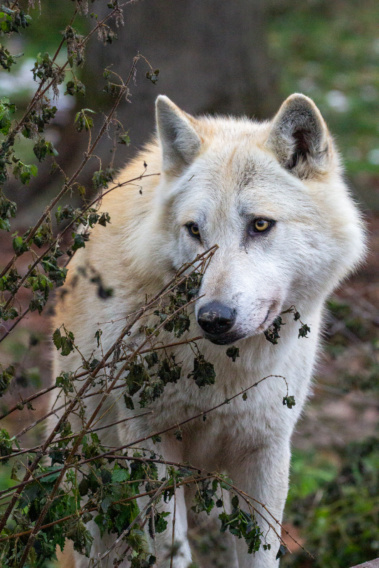
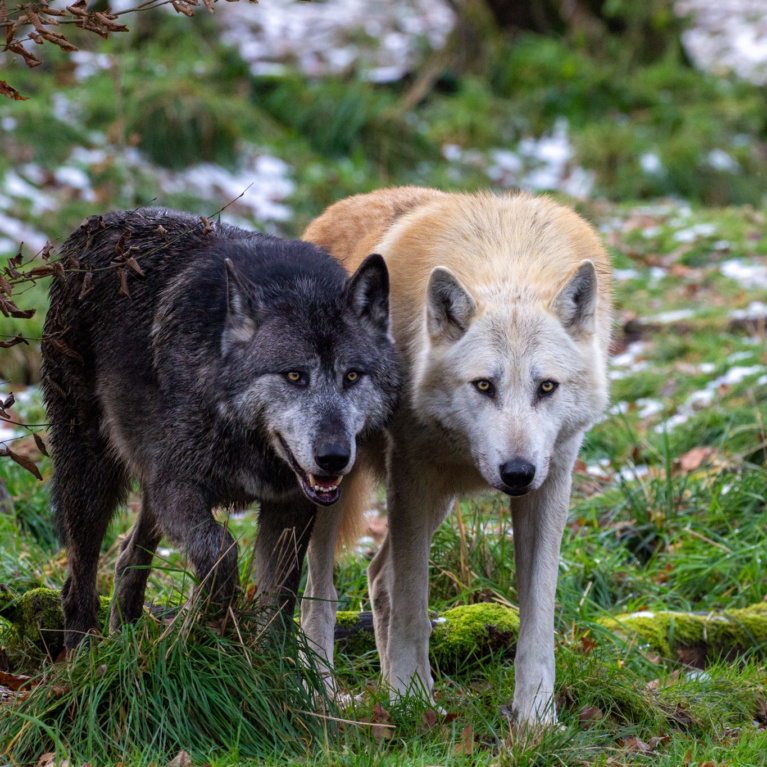
One of the characteristics of this subspecies is its wide range of coat colors. Individuals can be black or white, gray, or yellowish, even within the same litter. Melanism in wolves is fairly rare in Eurasia, whereas wolves in Canada are more often black. The subspecies Canis lupus occidentalis encompasses several former subspecies, such as the Mackenzie wolf (Canis lupus mackenzii) and the Tundra wolf (Canis lupus tundrarum). Since its reintroduction to Yellowstone, the ecosystem has regained its balance, allowing species that had disappeared to return.
Food
It feeds on moose, deer, caribou, and bison. But it also feeds on smaller prey such as beavers, lemmings, ground squirrels, and snowshoe hares.