White Stork
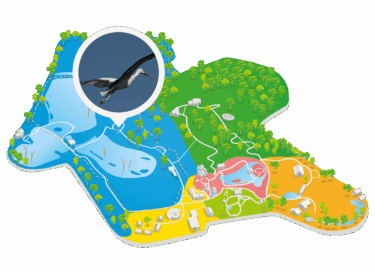
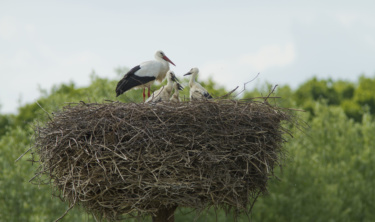
Levez les yeux et observez les nids des cigognes blanches sur le sentier bleu dédié aux animaux d’Europe !
The Avid Traveler
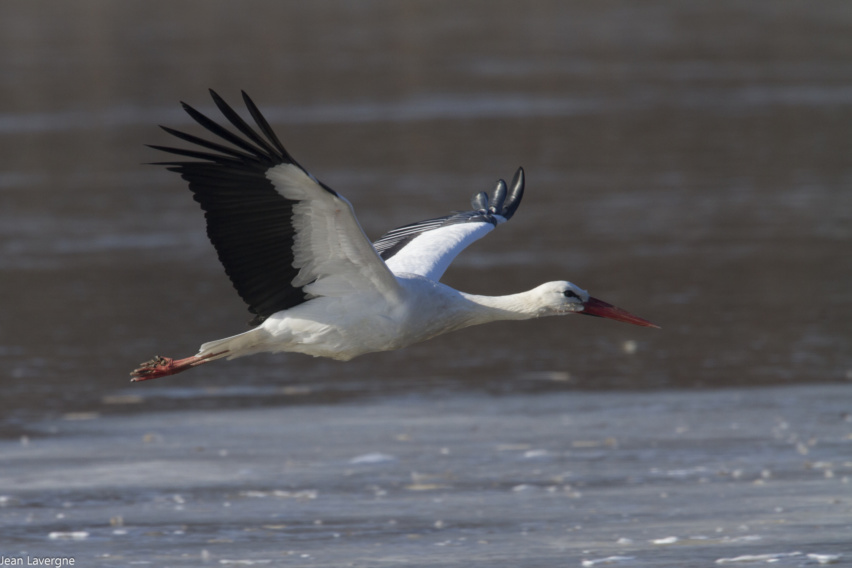
As a migratory species, it leaves cold regions due to a lack of food and heads to Africa to spend the winter there.
This species nearly disappeared from our region, but it has been preserved through a captive breeding and reintroduction program.
The park participates in the white stork conservation program by releasing individuals that have been kept in captivity for three winters to eliminate their migratory instinct.
IUCN status
The International Union for Conservation of Nature’s Red List of Threatened Species (IUCN)
Description
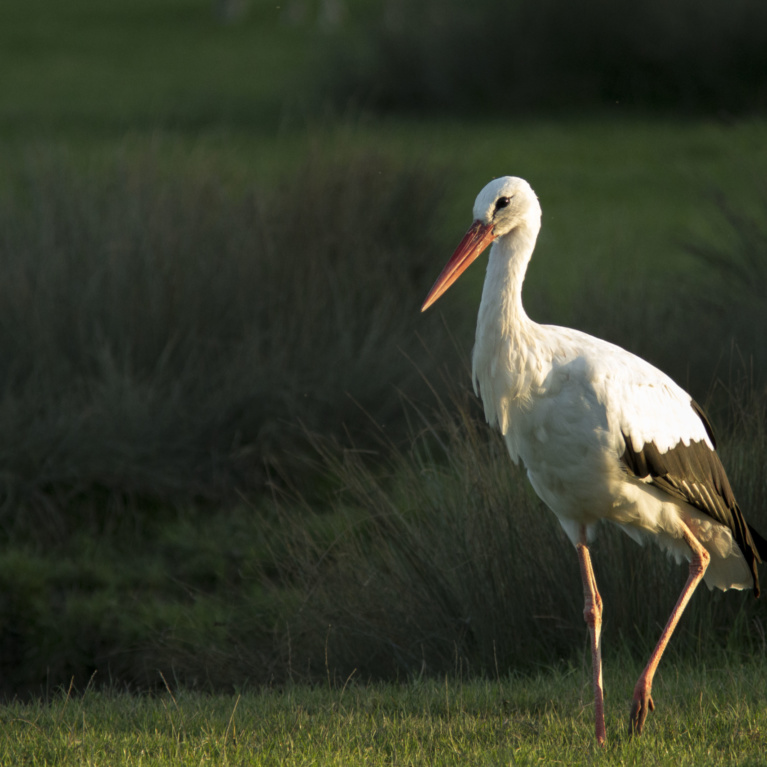
Ciconia ciconia
Stork family
3kg
150cm
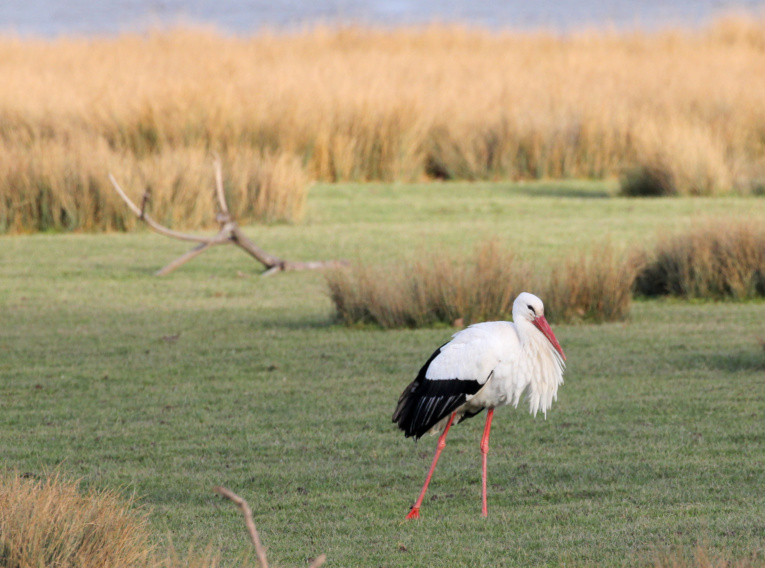
Wet meadows, floodplains, orchards, and villages
Least Concern
18 years
Did you know?
It readily settles near human dwellings. A stork’s nest can weigh up to 500 kg (the record is 629 kg in Alsace) and serves as a veritable public housing complex for sparrows.
Food
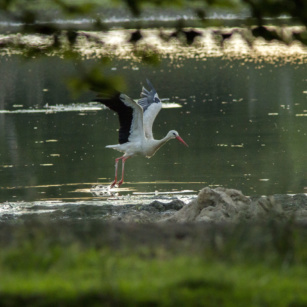
Contrary to popular belief, frogs are only a supplementary food source. The bulk of the white stork’s diet consists of insects—primarily earthworms and mollusks—followed by fish and rodents.