Wild boar
The Forest Gardener
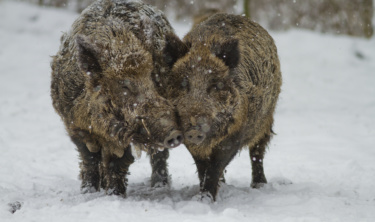
Using its keen sense of smell, the wild boar can identify about forty edible plants just by their scent!
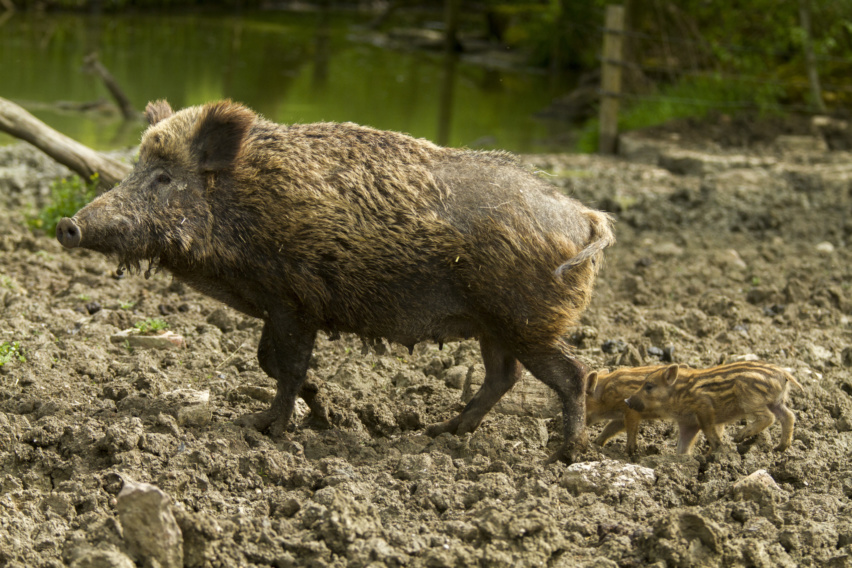
It gets rid of parasites by taking mud baths. This also helps it cool off in the summer, since wild boars are unable to sweat.
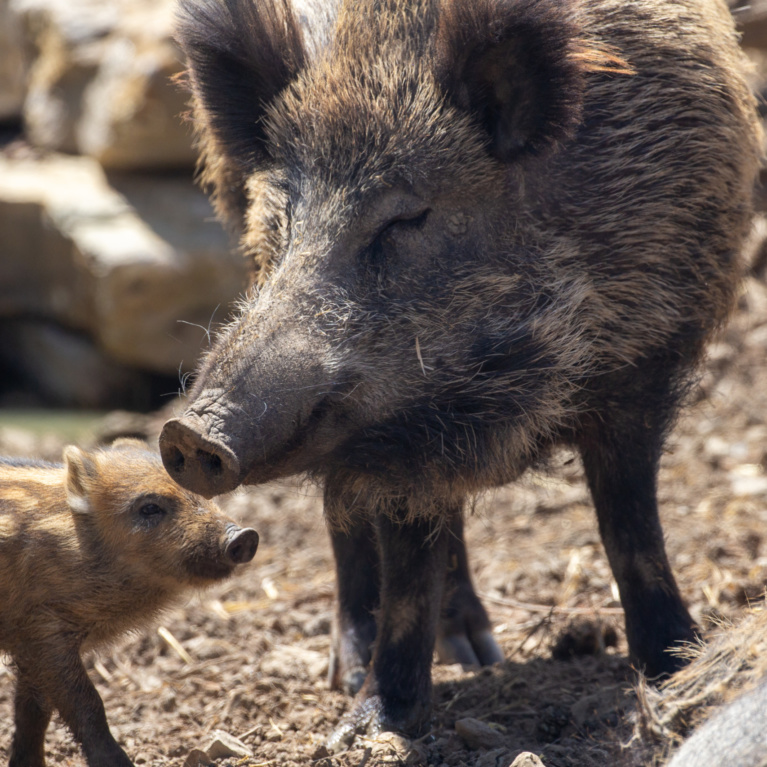
In the months leading up to the rut, males develop a thick layer of tissue beneath the skin on their flanks to act as a protective shield during fights. The animals can injure each other with their sharp canine teeth, known as tusks. The female, or sow, gives birth to her piglets after a gestation period of 3 months, 3 weeks, and 3 days.
IUCN status
The International Union for Conservation of Nature’s Red List of Threatened Species (IUCN)
Description
Sus scrofa
Suicides
60 to 200kg
90cm
Almost everywhere in Europe
Least Concern
15 to 25 years in captivity / 10 years in the wild
The different names
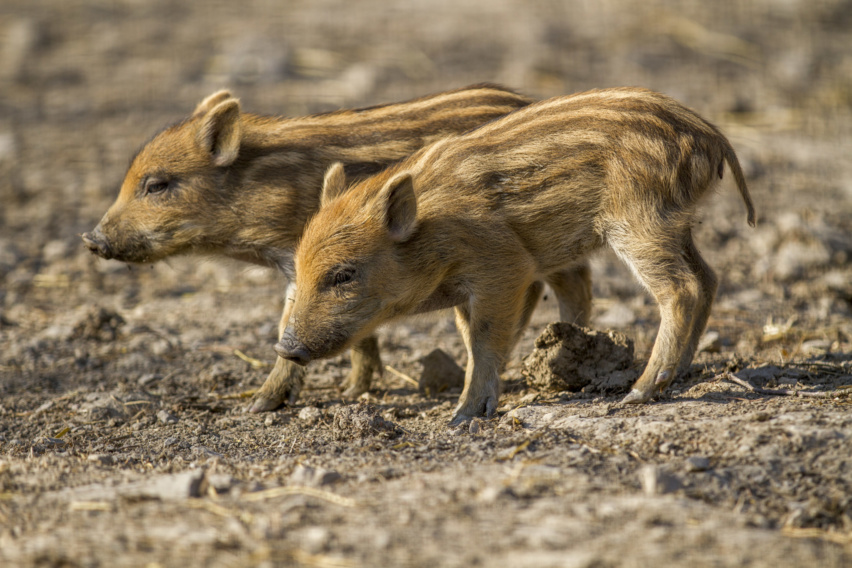
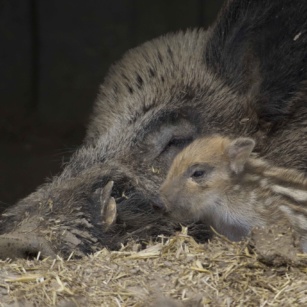
From 0 to 6 months: Piglet – from 6 to 12 months: Young boar – from 1 to 2 years: Young boar – from 2 to 3 years: Boar (male) and Sow (female) – from 3 to 4 years: Three-year-old (male) and Sow (female) – 4 to 5 years: Four-year-old (male) and Sow (female) – 5 years and older: Old Boar and Old Sow
Food
Wild boars eat everything! Acorns and other fruits, insects, mushrooms, roots, earthworms, dead animals…