Alpaca
Come meet our alpacas! With their gentle gaze, calm demeanor, and silky wool, alpacas charm people of all ages. Native to the high plains of South America, they now live on many farms around the world… and now also in the heart of the Lorraine countryside!
Who is this cousin of the llama?
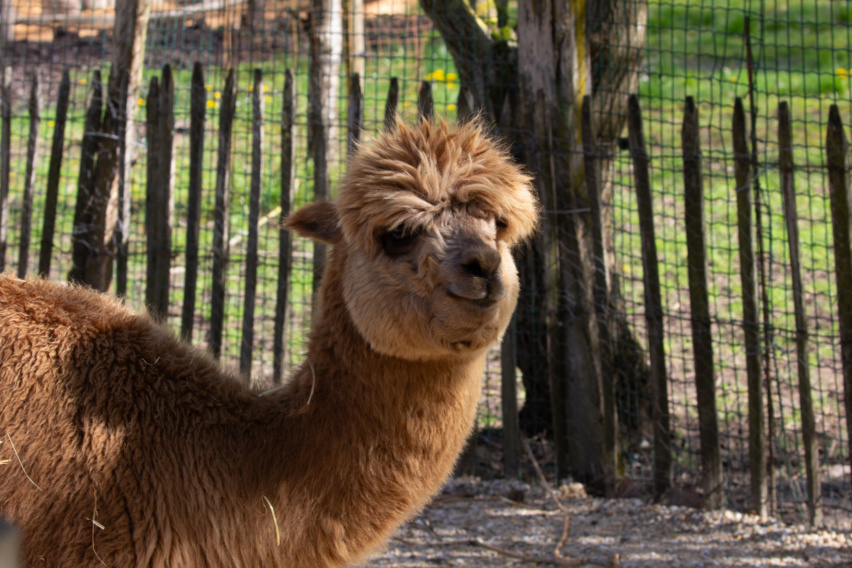
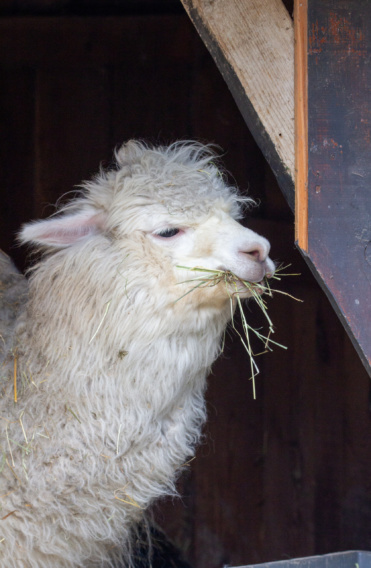
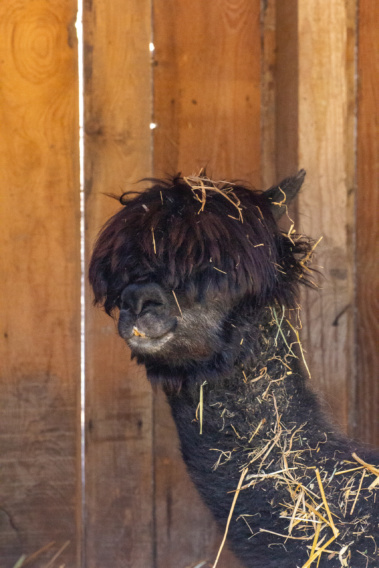
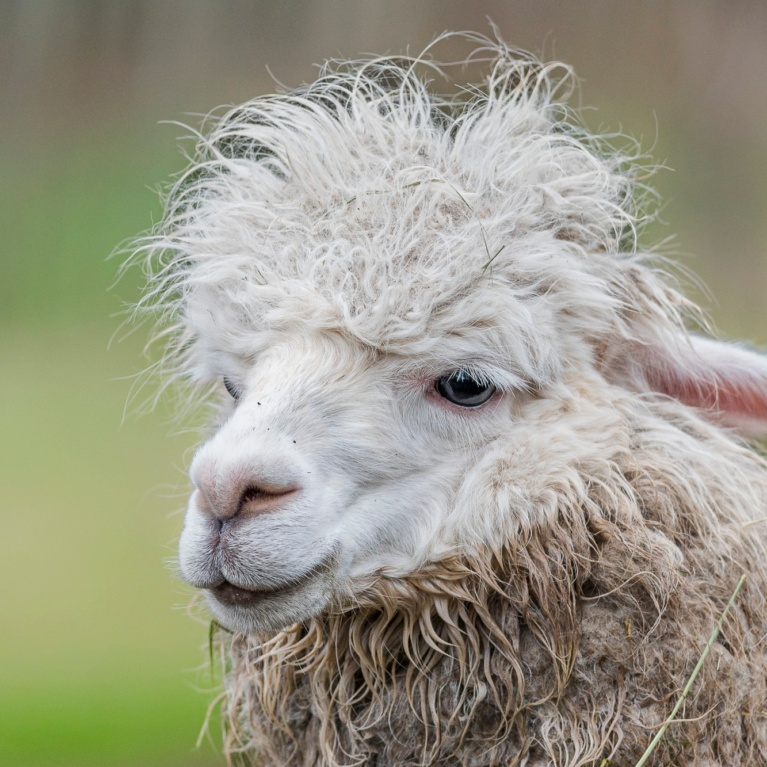
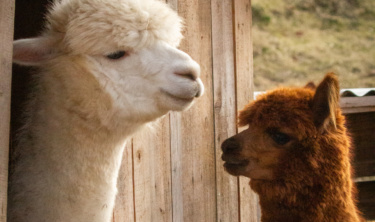
The alpaca is smaller than the llama, standing between 90 cm and 1.30 m at the withers and weighing 50 to 70 kg. Its thick coat comes in 22 different natural shades, ranging from pure white to deep black, with variations of brown, beige, and gray. Its head is adorned with two pointed ears and a tuft of wool.
An environmentally conscious herbivore
Alpacas are unique in the way they graze: they nibble the grass without pulling up the roots, which helps preserve pastures. In addition, their soft pads—unlike hooves—help limit soil erosion. All of these reasons are why they are often cited as a model of sustainable livestock farming!
IUCN status
The International Union for Conservation of Nature’s Red List of Threatened Species (IUCN)
Description
Vicugna pacos
Camelid
50 to 70 kg
90 to 130 cm
The Andes (Peru, Bolivia, Chile)
Least Concern
15 to 20 years old
A precious, time-honored wool
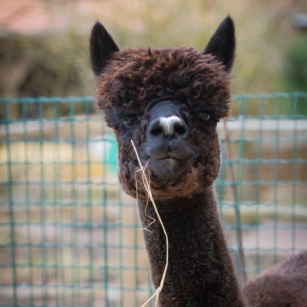
Alpacas have been domesticated for thousands of years by Andean peoples for their exceptional wool. It is lightweight, warm, soft, and hypoallergenic. Unlike its cousin, the llama, the alpaca is not used as a pack animal.
Did you know?
Despite its small size, the alpaca is extremely agile. It can jump over 1.5-meter-high fences if it feels threatened or if it wants to explore another pen. A surprising ability for such a cute animal!
Food
Alpacas feed mainly on grass, hay, and leaves. They digest their food very efficiently, making them economical and environmentally friendly consumers.