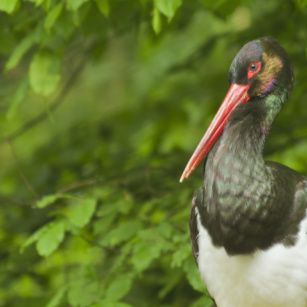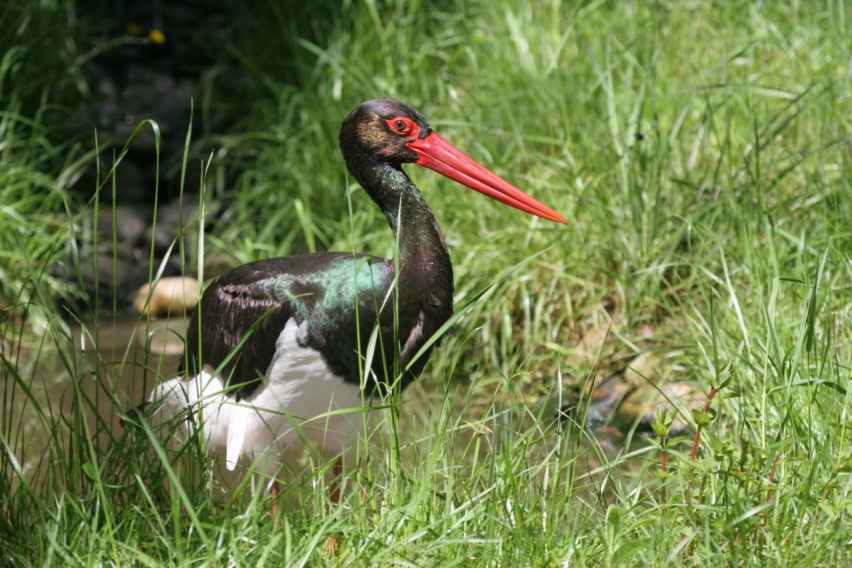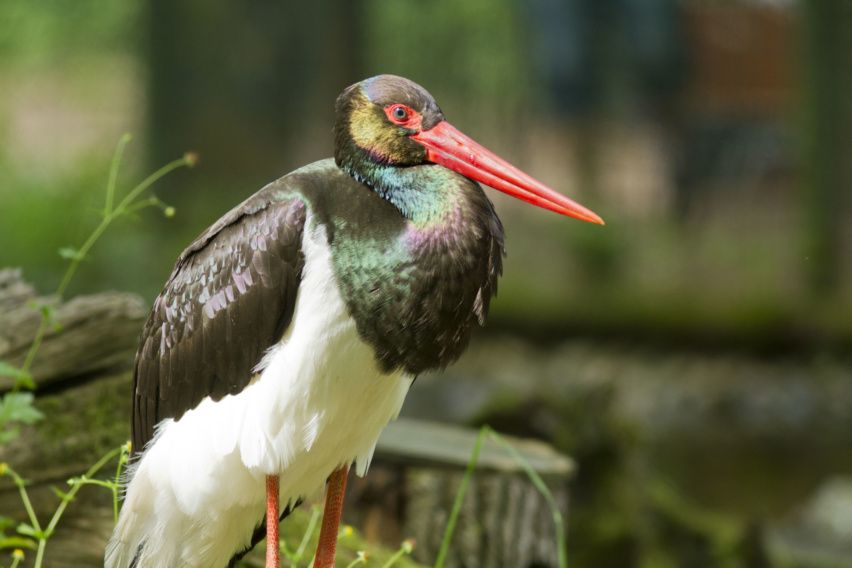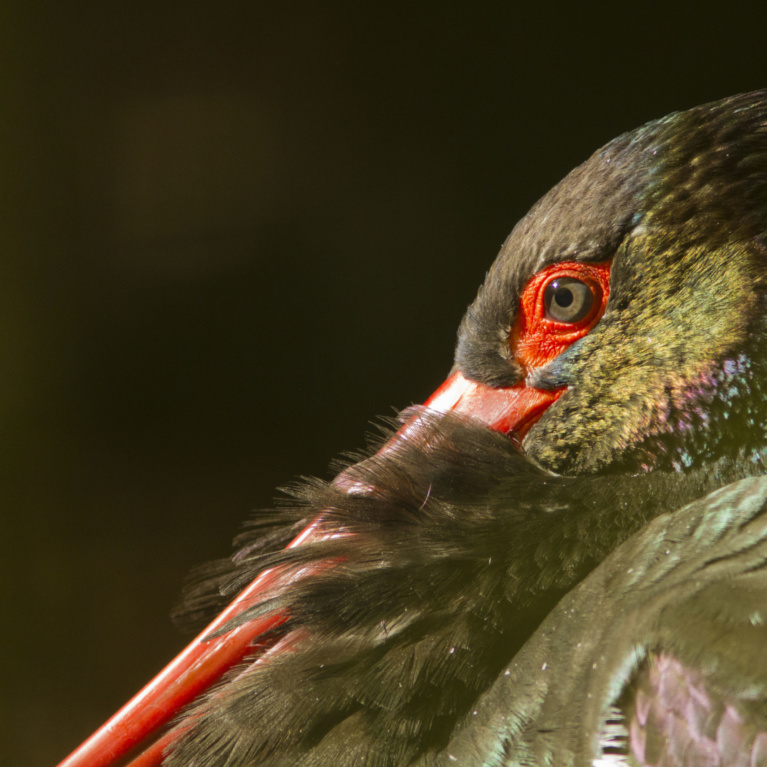
Black Stork
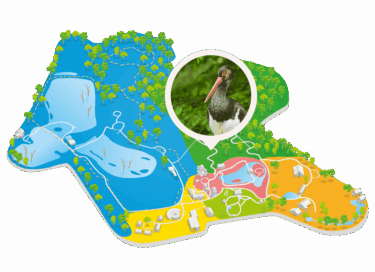
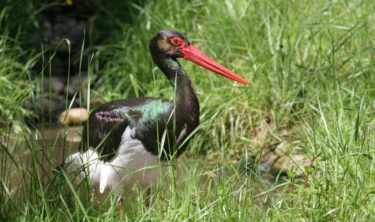
A top-secret bird
Its nest is enormous and well-protected, built deep
in the forest in a large tree. The black stork winters in Central Africa.
To increase the birds’ chances of breeding, measures are taken to avoid disturbing them and to protect their nesting sites. If you find a nest, keep your distance and notify the ONF.
IUCN status
The International Union for Conservation of Nature’s Red List of Threatened Species (IUCN)
Did you know?
It lives in forests near wetlands (streams, flooded meadows, and rivers). It used to be found only in Eastern Europe, Russia, and Spain. Since the 1970s, its populations have grown, making it possible for the species to re-establish itself in Western Europe.
Food
The black stork feeds on a variety of small animals, such as fish, amphibians, reptiles, insects, and small mammals, which it typically catches in forest streams and wet meadows.
Description
Ciconia nigra
Stork family
3 kg
150cm
Forests near wetlands
Least Concern
18 years