Wolverine

The Ghost of the Far North
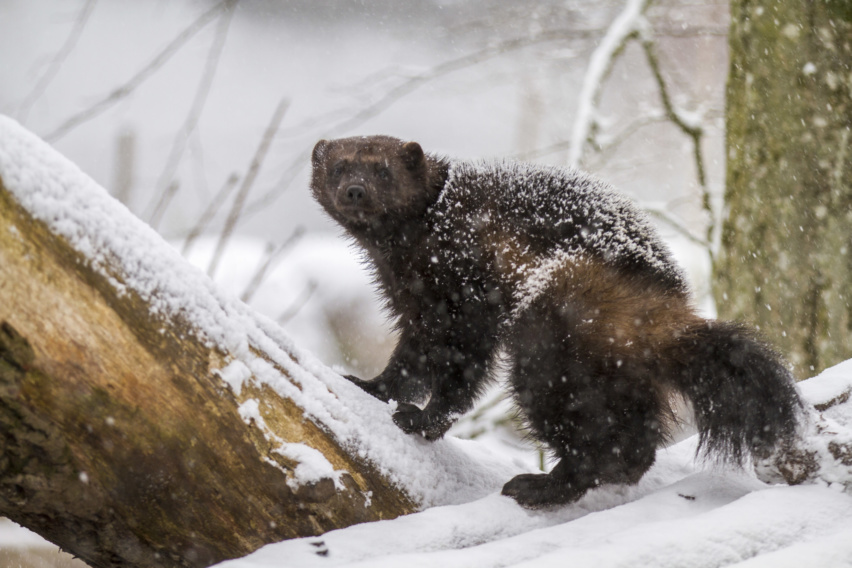
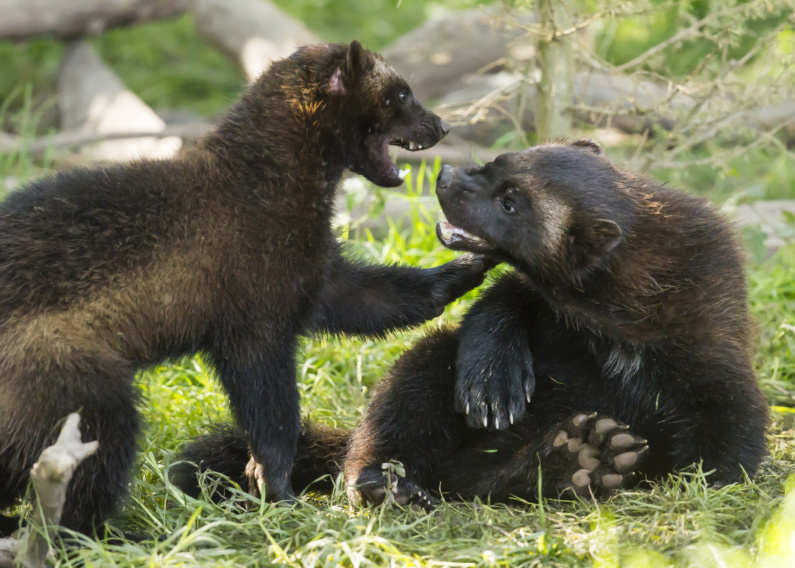
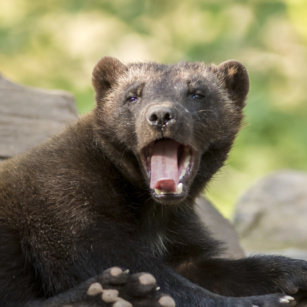
Often mistaken for a bear cub, the wolverine is the largest
member of the mustelid family (weasels, badgers, otters, etc.) in Europe. Adapted to walking in snow (toes connected by webbing) and withstanding the cold (dense fur that does not retain water), the wolverine can travel long distances in search of food. Its semi-retractable claws allow it to climb trees and dig beneath the snow.
The wolverine is primarily a solitary animal. It signals its presence by depositing the musky secretions from its anal glands on the ground or on a tree trunk. The wolverine is unwelcome when it preys on the reindeer of the peoples who depend on them (Sami, Even, etc.), as well as on sheep; thus, it is hunted or trapped throughout nearly its entire range. Locally, it suffers from the decline of bears and wolves, as it is not a skilled hunter and depends on them for the remains of herbivore carcasses
IUCN status
The International Union for Conservation of Nature’s Red List of Threatened Species (IUCN)
Description
Gulo gulo
Mustelids
8 to 18kg
35 to 45cm
Tundra and Siberian Scandinavian forests
Least Concern
12 to 15 years
Did you know?
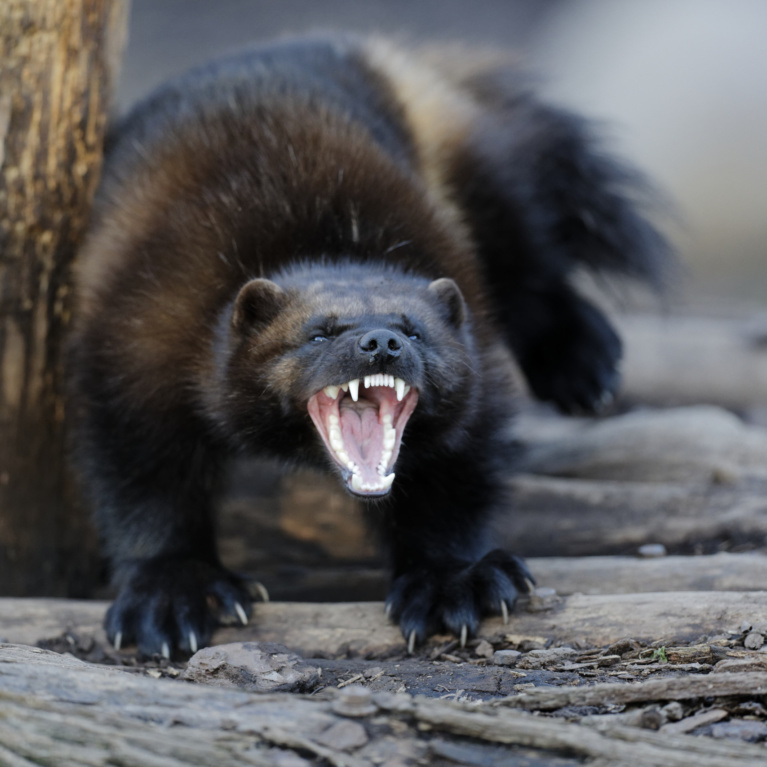
In Quebec, because its teeth resemble those of a hyena, the wolverine is nicknamed “the northern hyena”!
Food
A predator and scavenger, it is a master of adaptation. When it’s hungry, not even frozen bones can withstand its powerful jaws.