Great Cormorant
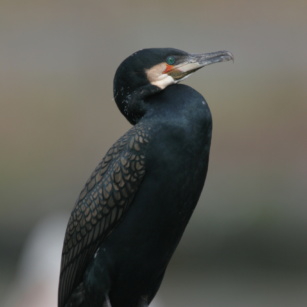
The sea crow
Once primarily a coastal bird (found along the Brittany coast), the Great Cormorant is now expanding inland (to rivers, lakes, and large bodies of water) as its population grows.
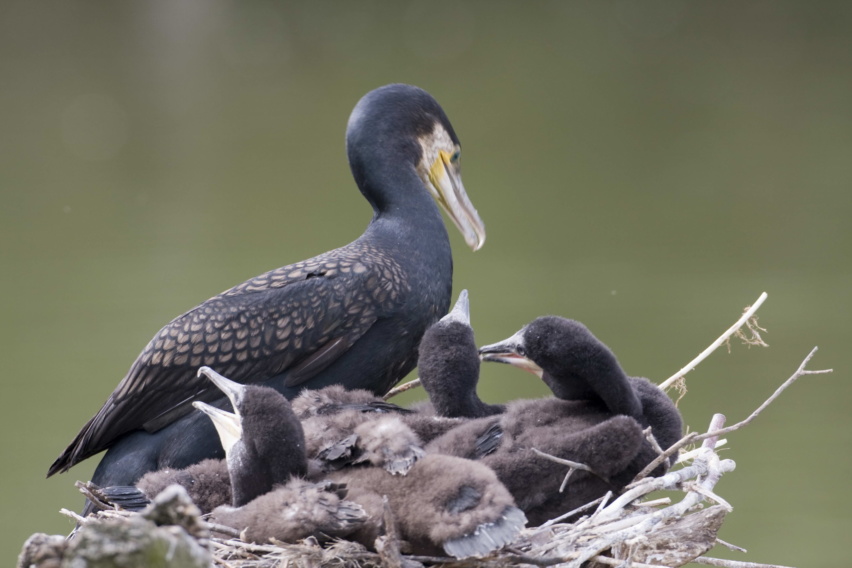
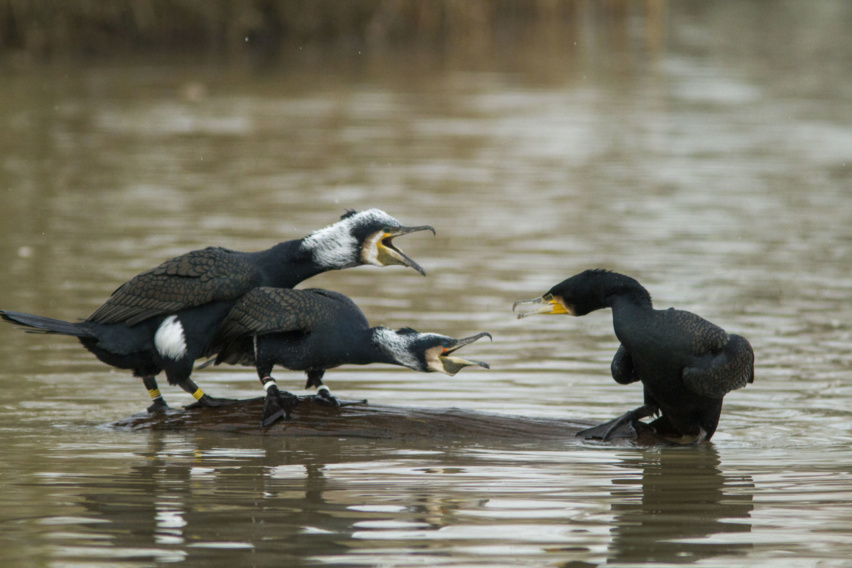
Highly social, it rests with its fellow birds in large roosts. It breeds in colonies and sometimes remains at the same site for several years.
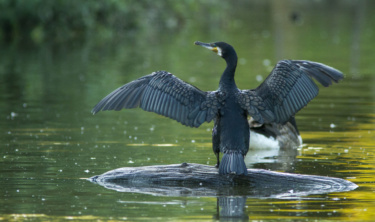
Its plumage is not waterproof. It can absorb water, which allows the bird to dive faster and deeper (17 meters).
IUCN status
The International Union for Conservation of Nature’s Red List of Threatened Species (IUCN)
Description
Phalacrocorax carbo
Cormorant family
2 to 2,5kg
80 to 100cm
Rocky or sandy shores, near freshwater, brackish, and saltwater bodies
Least Concern
23 years
Did you know?
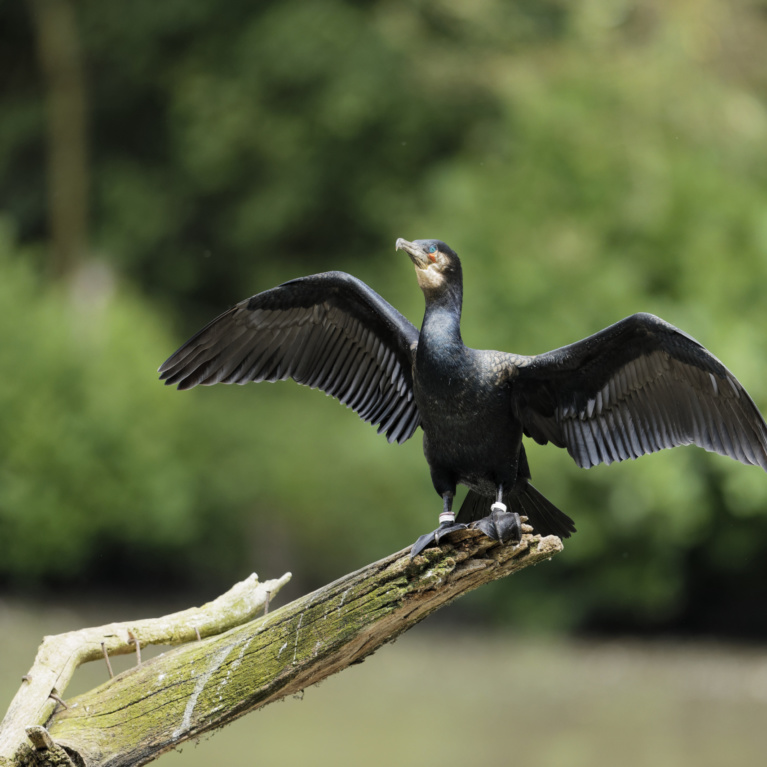
To dry its feathers, it perches with its wings spread wide, facing the sun. This behavior led to its deification in Egypt during the time of the pharaohs: the bird that worshipped the Sun God was itself an object of worship.
Food
In freshwater, the cormorant feeds on perch, catfish, bream, roach, tench, and trout.