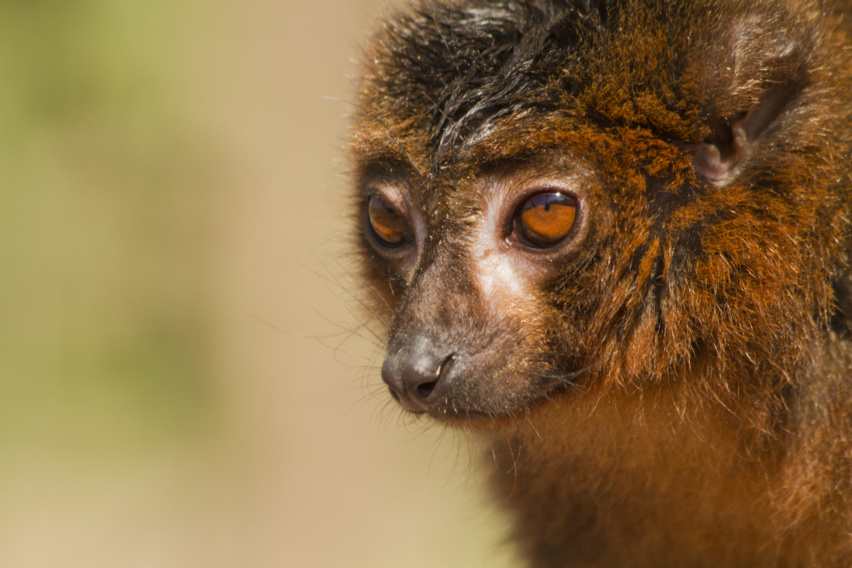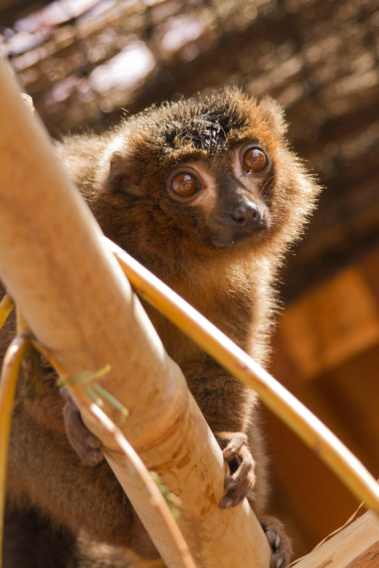
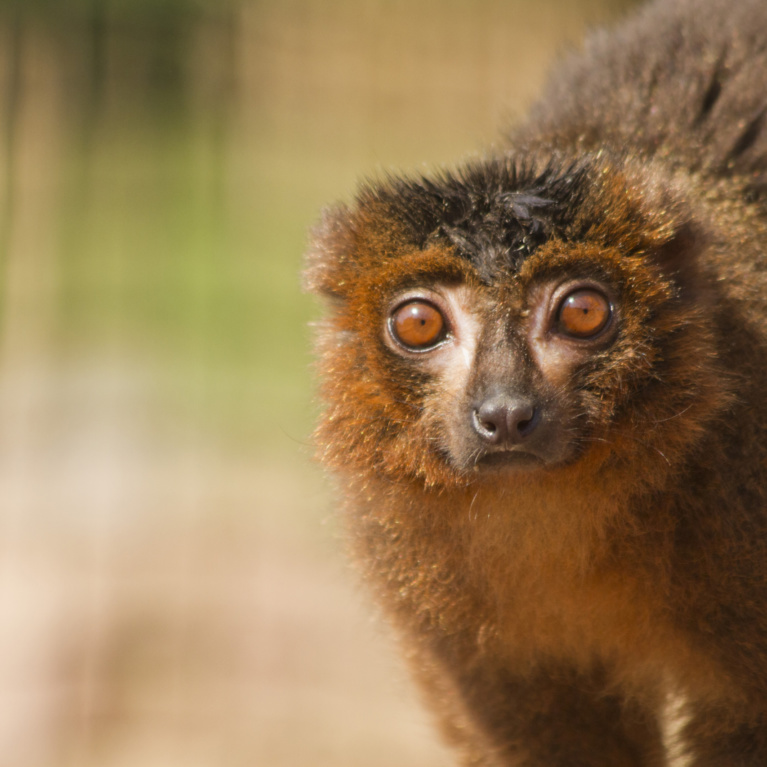
Red-bellied lemur
Life in a family group
There is no clear dominance hierarchy;
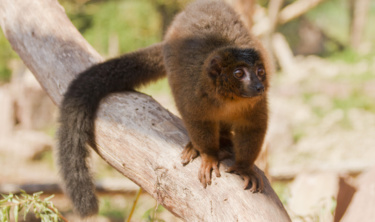
groups consist of a pair and their offspring. All members of a group help care for the young.
This lemur communicates extensively through vocalizations: alarm grunts, contact calls, or group-bonding calls.
IUCN status
The International Union for Conservation of Nature’s Red List of Threatened Species (IUCN)
Description
Eulemur rubriventer
Lemurs
1,5 to 2,5kg
body: 40 cm; tail: 50 cm
Madagascar’s tropical forests
Vulnerable
25 to 30 years in captivity / 18 to 20 years in the wild
Threats
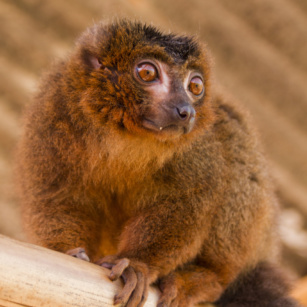
These endemic animals are found only in Madagascar, as is the case with most of the island’s flora and fauna. Deforestation (demand for exotic wood, slash-and-burn farming, etc.) and poaching are their main threats. The park supports the AEECL and Help Simus associations in the conservation and protection of lemurs in Madagascar, and the NGO Anne-Marie, Sœur du monde in supporting local communities.
Food
He is a vegetarian and eats fruit, leaves, flowers, small invertebrates, and even soil.