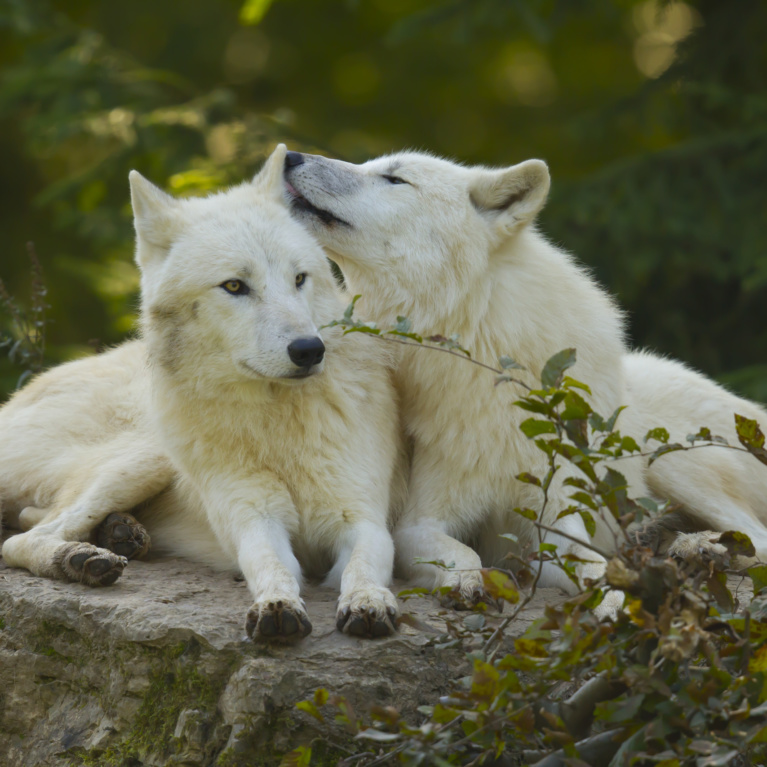
Arctic white wolf
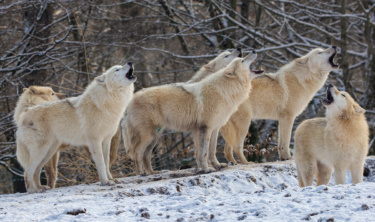
The Caribou Doctor
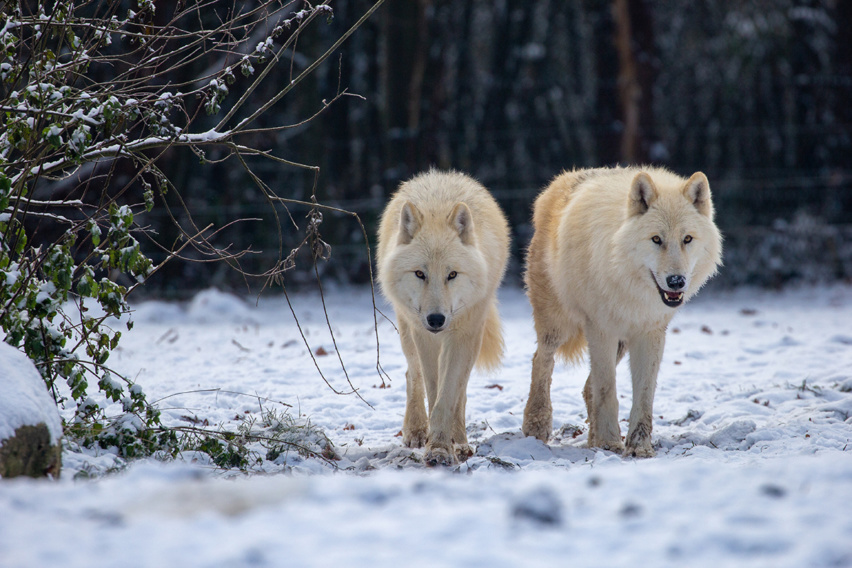
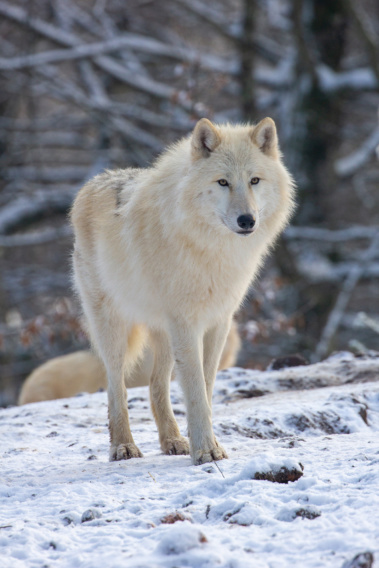
This wolf is well adapted to the harsh climate of this part of the world. It has thick fur, broad feet, and long legs that make it easy for it to move through the snow.
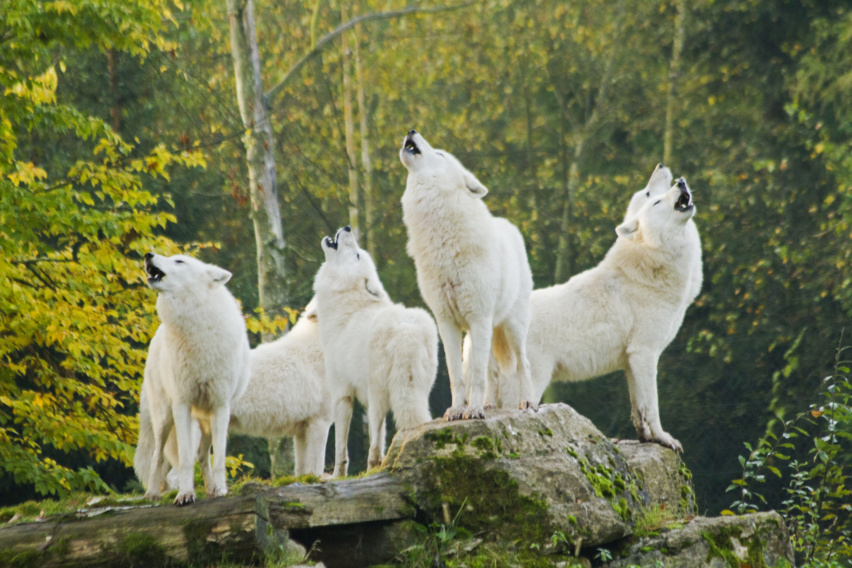
The wolf had a positive image among Native Americans, who nicknamed it “the caribou doctor.” The wolf plays a very positive role in nature. It engages in culling, as it eliminates the weakest animals from herds because they are easier to catch.
IUCN status
The International Union for Conservation of Nature’s Red List of Threatened Species (IUCN)
Description
Canis lupus arctos
Canids
Over 50kg
65 to 80cm
The far north of North America and Greenland
Least Concern
12 to 15 years
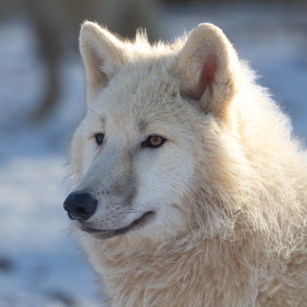
Did you know?
Den sites, which are difficult to dig into the frozen ground, can be used for many years. These wolves, which are not particularly wary of humans, have been studied.
The Arctic wolf’s coat allows it to withstand temperatures as low as -57°C. This winter coat can weigh up to 1 kg.
Food
It feeds on caribou, arctic hares, lemmings, and muskoxen.