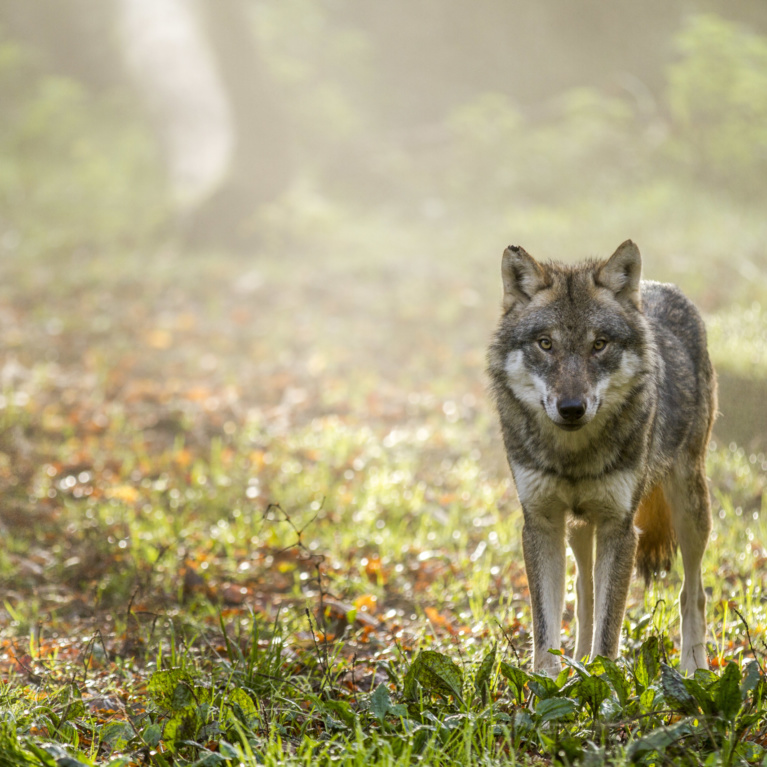
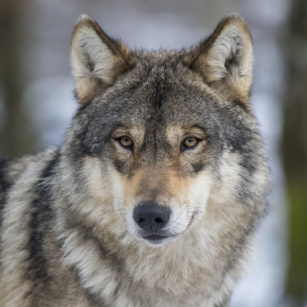
European gray wolf
The Big Bad Wolf?
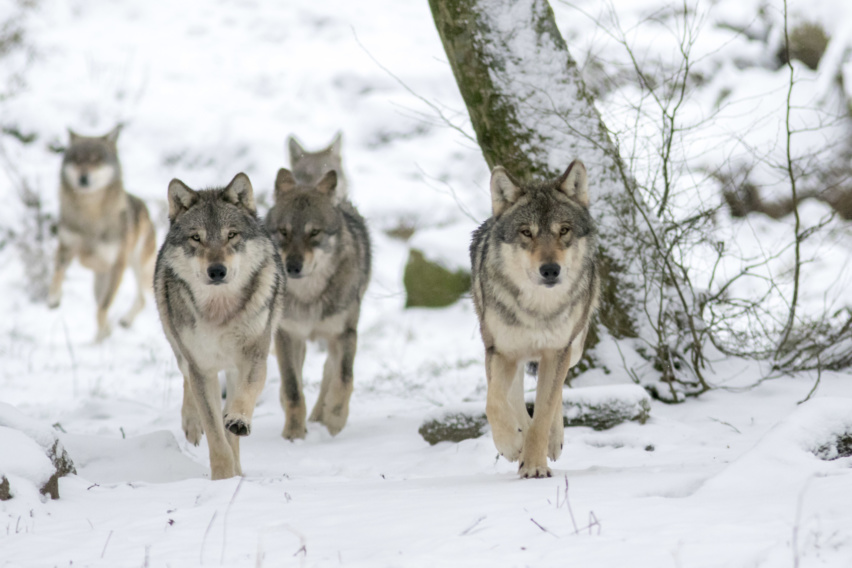
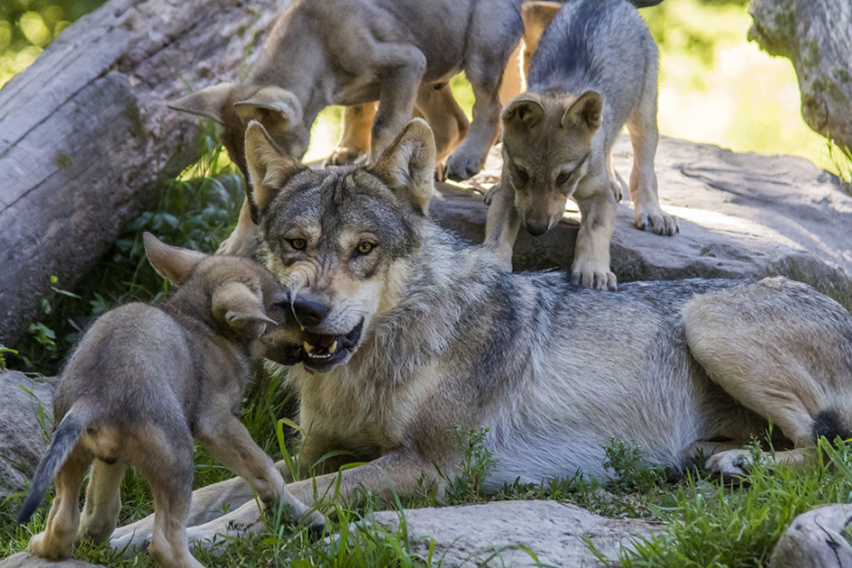
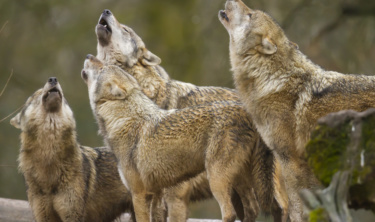
A social animal, the wolf lives in a hierarchical pack. Wolves within the same pack are often bound by family ties: the parents form the dominant pair and live with their offspring. The famous Big Bad Wolf of fairy tales has done great harm to the European wolf.
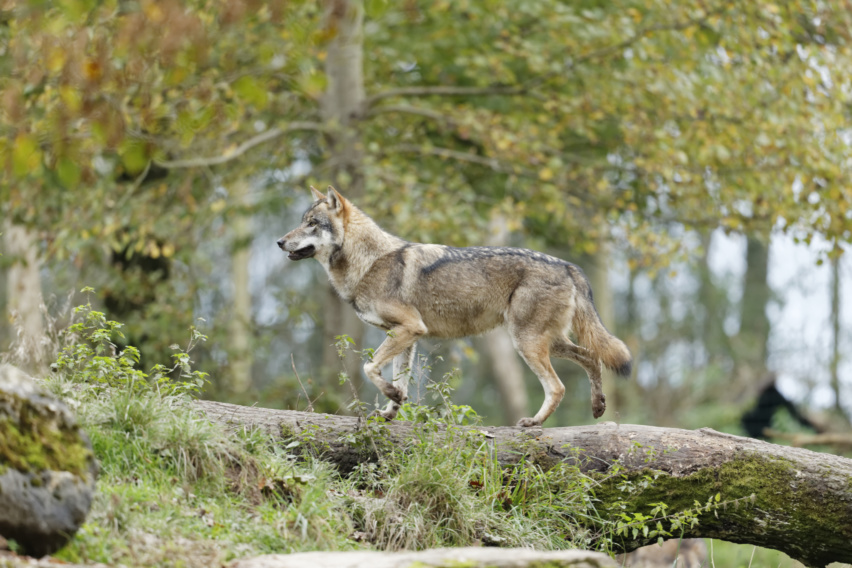
Once widespread, it was subjected to intensive hunting, leading to the species’ extinction in France in the 1930s. The European wolf has been returning naturally to France since 1992. It poses problems by preying on livestock if the herd is not adequately protected. The Patou (or Pyrenean Mountain Dog) can be trained to protect sheep from predators; it is an effective means of protection. The gray wolf is one of the ancestors of our domestic dogs. Since 2011, a few individuals have been present in the Vosges.
IUCN status
The International Union for Conservation of Nature’s Red List of Threatened Species (IUCN)
Description
Canis lupus lupus
Canids
30 to 55kg
60 to 90cm
Temperate forests of Europe
Least Consern
10 to 15 year
Did you know?
In Old French, “leu” means “wolf.” The expression is therefore a shortened form of “à la queue (du) leu (le) leu.” Indeed, members of small wolf packs tend to move one behind the other!
Food
As a carnivore, it hunts in packs for prey that can be much larger than itself, such as deer. It plays a role in regulating the populations of large herbivores.