Red panda
The Himalayan Fire Fox
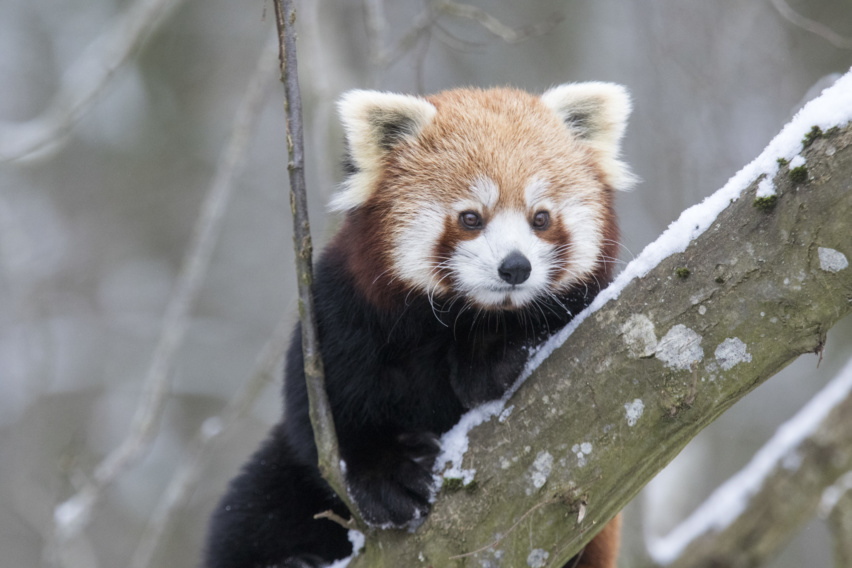
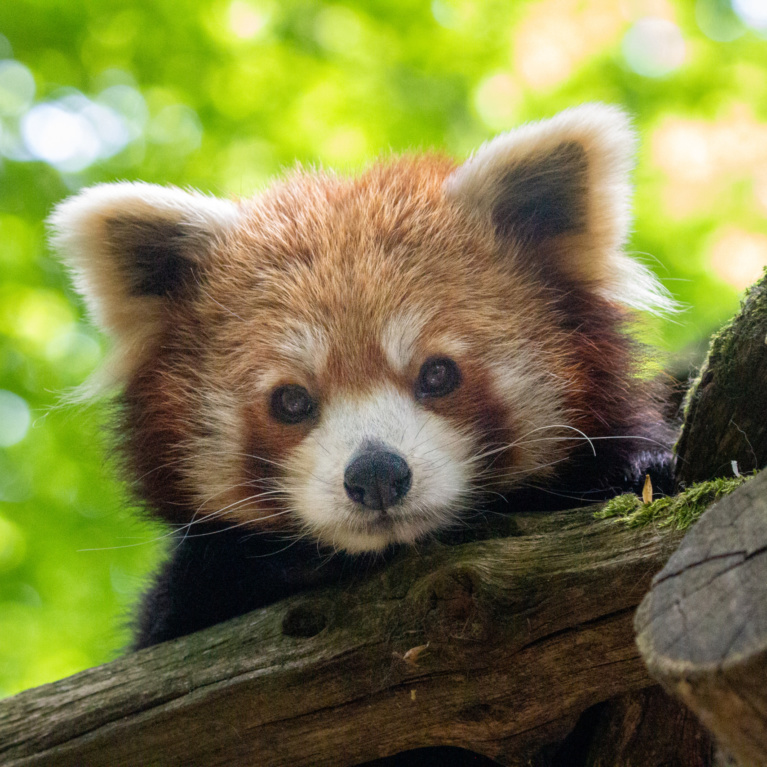
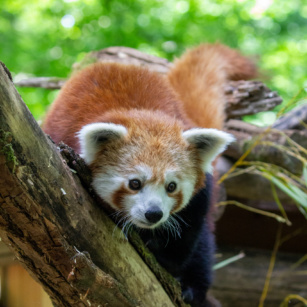
Unlike primates, the red panda does not have an opposable thumb. However, just like the giant panda, it has a modified bone in its wrist that acts like a thumb. This “sixth finger” allows it to hold bamboo stalks more easily between its front paws. Its semi-retractable claws and fur under its paws enable it to climb trees effectively and prevent it from slipping on wet branches or ice.
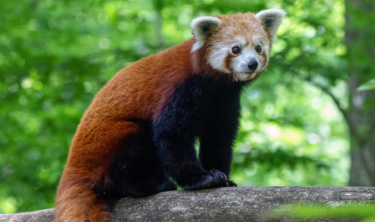
A solitary animal, it lives in pairs only during the breeding season. Mating occurs in the spring between April and June. The young remain with their mother until they are one year old. A crepuscular animal, it often rests on branches, dangling its legs in the air.
IUCN status
The International Union for Conservation of Nature’s Red List of Threatened Species (IUCN)
Description
Ailurus fulgens
Ailuridae
3 to 6kg
50 to 60cm
Nepal, China, Bhutan, India, and Myanmar
Endangered
10 to 18 year
Threat
Currently, the red panda is facing a significant loss of habitat due to deforestation, urban expansion, and poaching. The species is listed as “Endangered” on the IUCN Red List; it is estimated that between 2,500 and 10,000 red pandas remain in the wild.
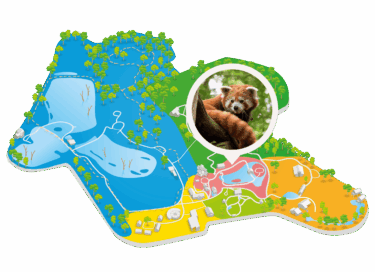
The park supports the Red Panda Network, an organization working in Nepal to conserve the red panda and raise awareness among local communities about its protection.
Did you know ?
Long classified as part of the raccoon or bear family because of their similarities, it is now classified in its own family, the Ailuridae, of which it is the sole member.
Food
It feeds mainly on bamboo, but also on mushrooms, seeds, acorns, insects, rodents, reptiles, eggs, and birds.