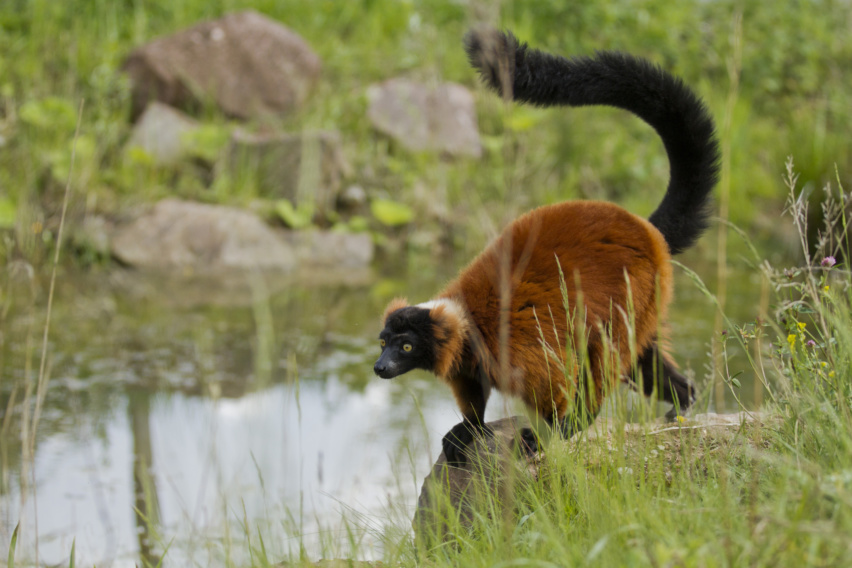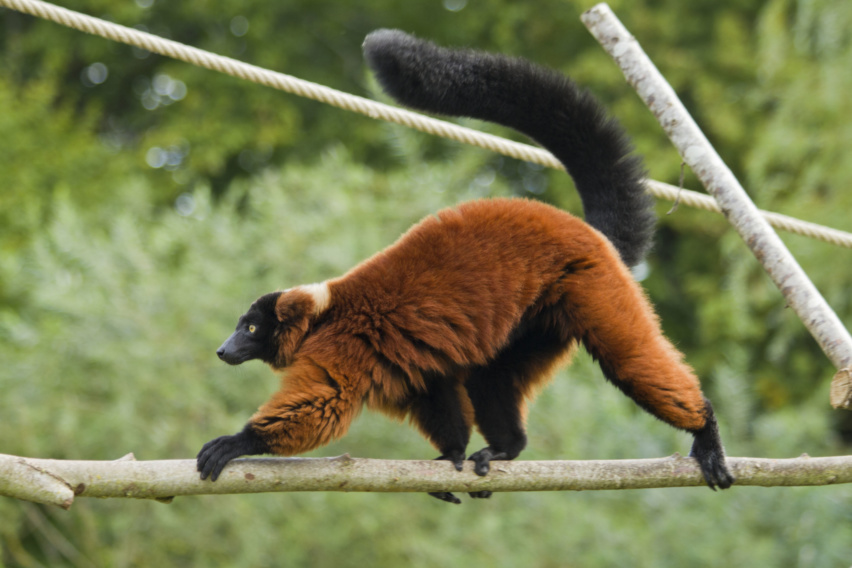

Red-throated loon
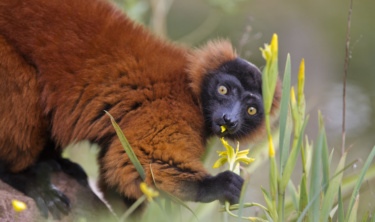
Disguised but loud
The red-breasted flycatcher is difficult to spot in its natural habitat because it rarely leaves the canopy (the tops of the trees).
However, it is easily identified by its call, which it uses to mark its territory in addition to scent markings.
IUCN status
The International Union for Conservation of Nature’s Red List of Threatened Species (IUCN)
Description
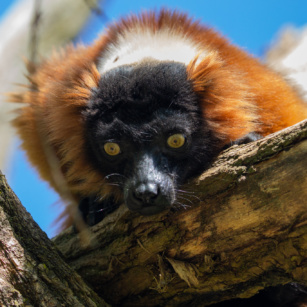
Varecia rubra
Lemur
About 4kg
body: 60 cm tail: 60 cm
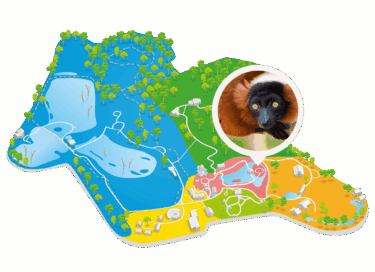
Madagascar’s tropical forests
Critically Endangered
25 years in captivity / 15 years in the wild
Threats
These endemic animals are found only in Madagascar, as is most of the island’s flora and fauna. Deforestation (due to demand for exotic wood, slash-and-burn farming, etc.) and poaching (for their meat or to be kept as pets) are their main threats.
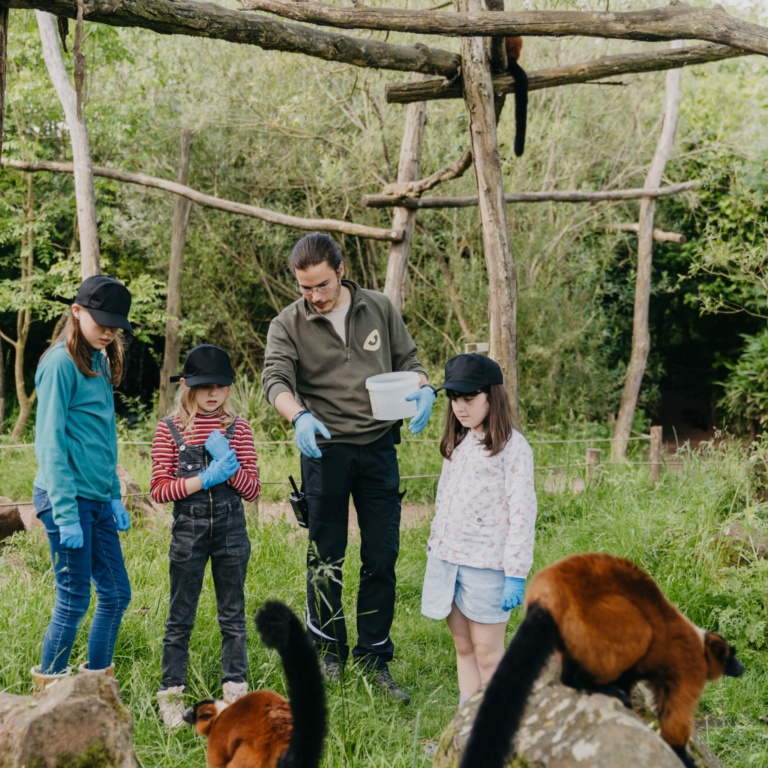
The park supports the AEECL and Help Simus associations in the conservation and protection of lemurs in Madagascar, and the NGO Anne-Marie, Sœur du monde in supporting local communities.
Did you know ?
After a gestation period of 90 to 102 days, the female gives birth to five young in a nest. They live in a group centered around a female. Once sexually mature, the young males leave their territory to join other groups.
Food
Varis are the most fruit-eating of all lemurs. They feed on fruit, leaves, flowers, and nectar.