



Little Egret


The most common “white heron” in Europe
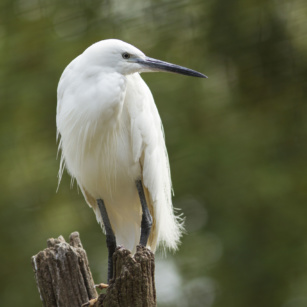
In breeding plumage, it has long feathers at the back of the crown, on the shoulders, and on either side of the tail.
It can be recognized by its black bill and legs, yellow feet, and slender body with white plumage. It differs from the cattle egret in the color of its bill (which is yellow in the cattle egret).
A gregarious species, it nests in colonies with other herons in trees. There can be more than 20 nests in a single tree, often only 75 cm apart. The little egret is increasing in numbers in France, where it is expanding into new territories, but its growth may be limited by damage to wetlands and very cold winters.
In Lorraine, it is observed in the summer but does not yet breed there.
IUCN status
The International Union for Conservation of Nature’s Red List of Threatened Species (IUCN)
Description
Egretta garzetta
Ardeidae
500g
55 to 95 cm
Wetlands of Europe
No evaluated
9 years old
Did you know?
The egret is one of the few species found on all five continents. It can be found in France as well as in the tropics. Nevertheless, it came very close to disappearing from Europe, where it was hunted for its feathers, known as “aigrettes.” These feathers were used to adorn the hats of elegant ladies. In German, it is called Seidenreicher (silk heron).
Food
The little egret feeds on small fish, frogs, aquatic insects, and small crustaceans.