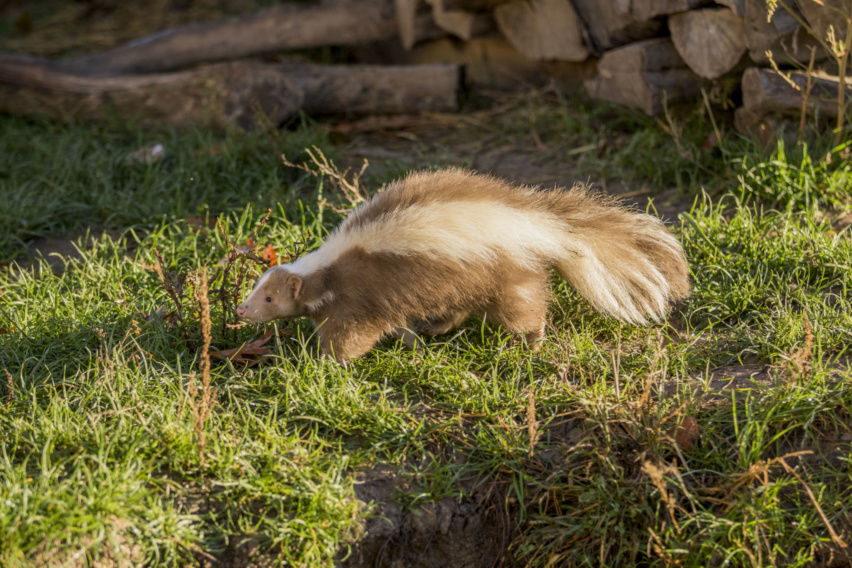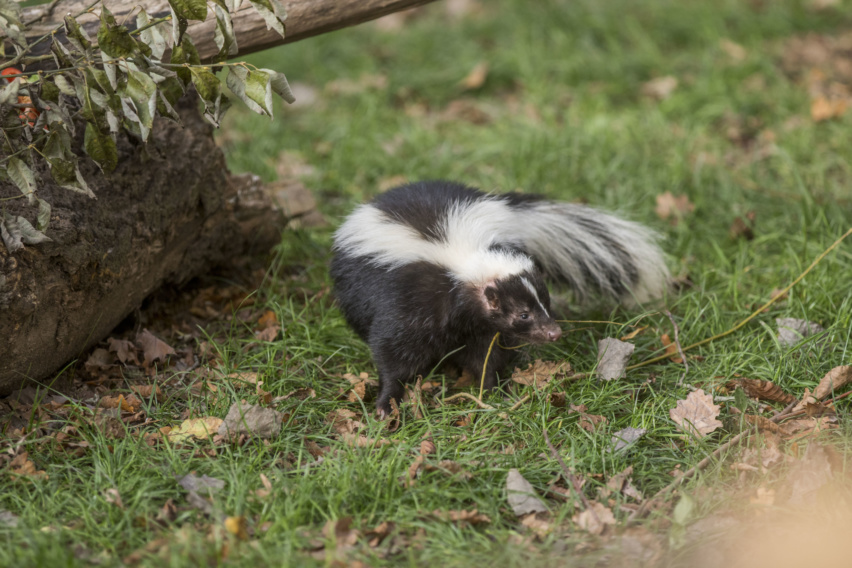

Striped skunk
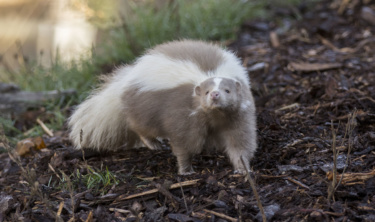
A true defense system
Its common name, “striped skunk,” is believed to be of
Italian origin and derives from “mofete,” meaning a noxious gas. It owes its name to one of its distinctive features: a defense mechanism, housed beneath its tail, whose odor acts as a powerful repellent.
A great lover of animals considered pests by humans, the skunk is generally well-accepted in rural areas, where it helps regulate insect and rodent populations. This solitary, nocturnal animal is, however, a nuisance in cities.
IUCN status
The International Union for Conservation of Nature’s Red List of Threatened Species (IUCN)
Description
Mephitis mephitis
Mephidites
2 to 5kg
28 to 40cm
Open spaces, forests, plains, mountains, and farmland
Least Concern
10 to 15 years in captivity / 3 to 7 years in the wild
Did you know?
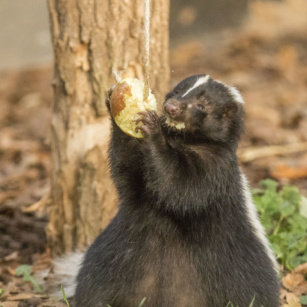
The foul odor it emits comes from a viscous, yellow musk, a sulfur-containing alcohol known as “thioalcohol.” Secreted by two anal glands, it can be sprayed up to 6 meters, and 4 to 5 times in a row. With the wind, the smell can spread over nearly a kilometer!
Food
An omnivore, the skunk excels at flushing out its prey: it digs into the ground or tears apart old stumps, all with the help of its powerful claws. In this way, it hunts down rodents, amphibians, reptiles, insects, and more. With a taste for eggs, baby birds, and even carrion, its diet varies with the seasons.