Ural Owl
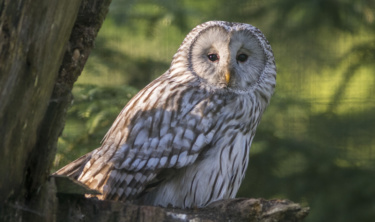
The Great Snowy Owl
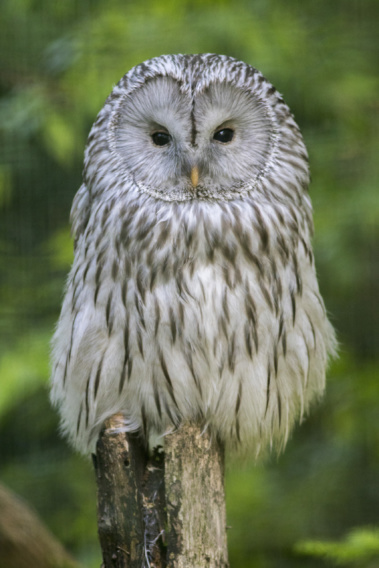
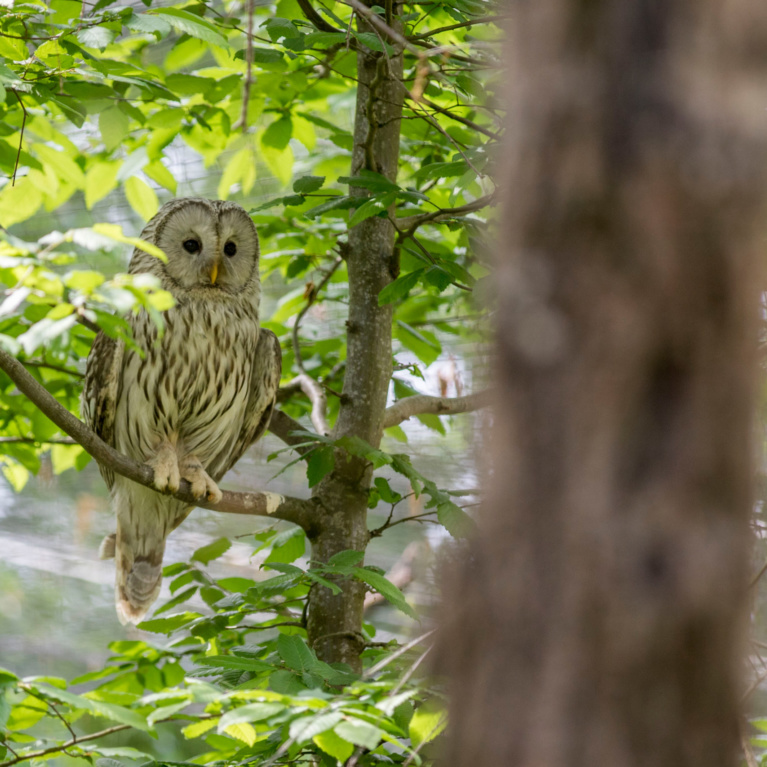
The Ural owl lives in the boreal forests of Scandinavia and Russia. Its plumage is thick in these regions. It is also found in the forests of the Balkans, where its plumage is browner.
The Ural Owl is crepuscular and nocturnal. During the mating season, it may be active in broad daylight. It nests in a hollow tree or in an old raptor’s nest. It is highly territorial, especially during the nesting season, and does not hesitate to attack intruders. This has even earned it its Swedish name, which refers to its aggressiveness.
In German, its name refers to the resemblance of its striped tail feathers to those of the Northern Goshawk (a bird of prey closely related to the buzzard).
IUCN status
The International Union for Conservation of Nature’s Red List of Threatened Species (IUCN)
Description
Strix uralensis
Strigidae
600 g to 1.2 kg
55cm
Taiga
Least Concern
15 years
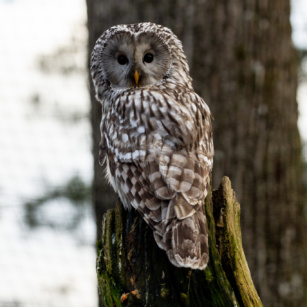
A triumphant return
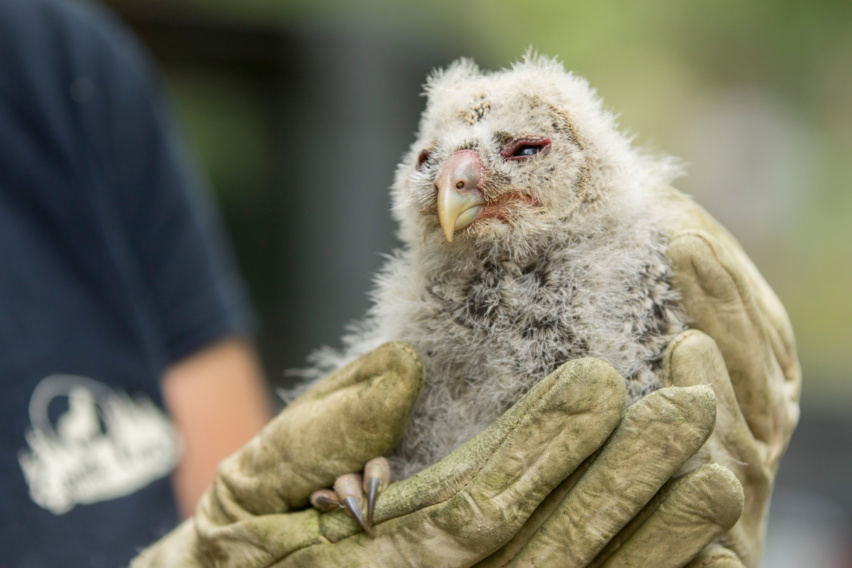
The Ural owl was successfully reintroduced in Bavaria National Park in Germany in the 1970s, then in the Czech Republic, and now in Austria to reestablish a connection with the Balkan population.
Food
It feeds mainly on rodents, but also on frogs, insects, and birds.