


Vosges Cow
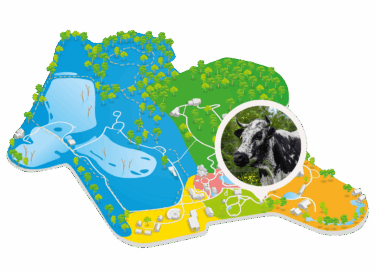
At the Sainte-Croix Wildlife Park, the Vosges cow can be seen at the Ferme des Vents. Visitors can observe this majestic and calm cow while learning about its vital role in preserving mountain landscapes and agricultural traditions.
An iconic cow of the Vosges Mountains
The Vosgienne cow is a hardy, ancient breed native to the Vosges Mountains in eastern France. Although it is relatively unknown outside its region of origin, it is extremely important to local farmers, both for its milk production and for its hardiness and ability to adapt to harsh conditions. It has established itself on mountain farms, where it excels due to its ability to adapt to steep terrain and harsh winters.
Description
Bos taurus
Cattle
600 to 700 kg
about 130cm
Vosges (France)
Least concern
12 to 15 year
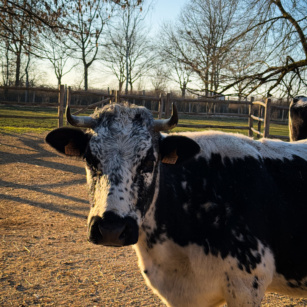
A cow with a gentle gaze and a unique coat
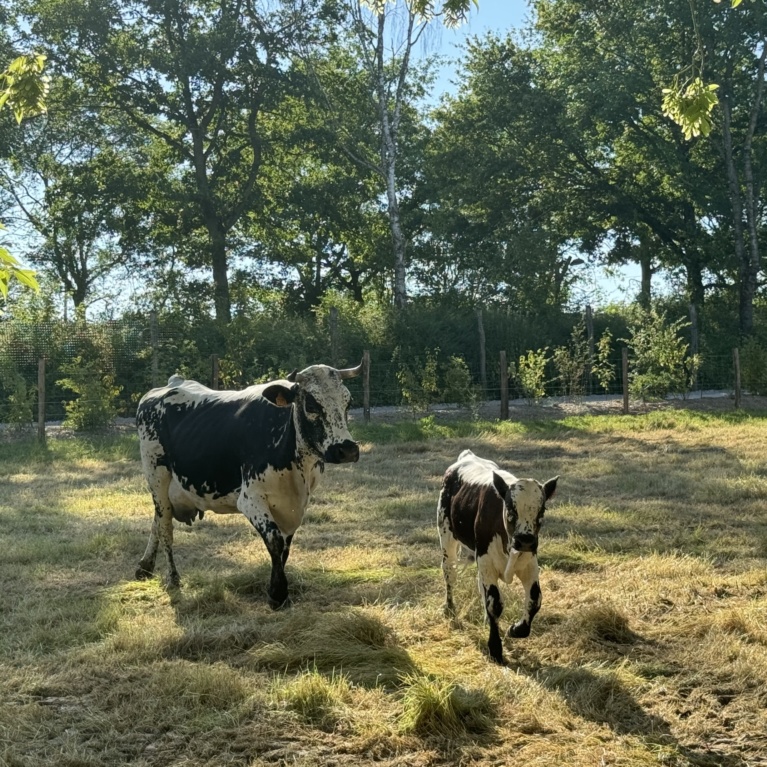
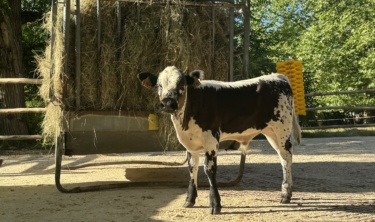
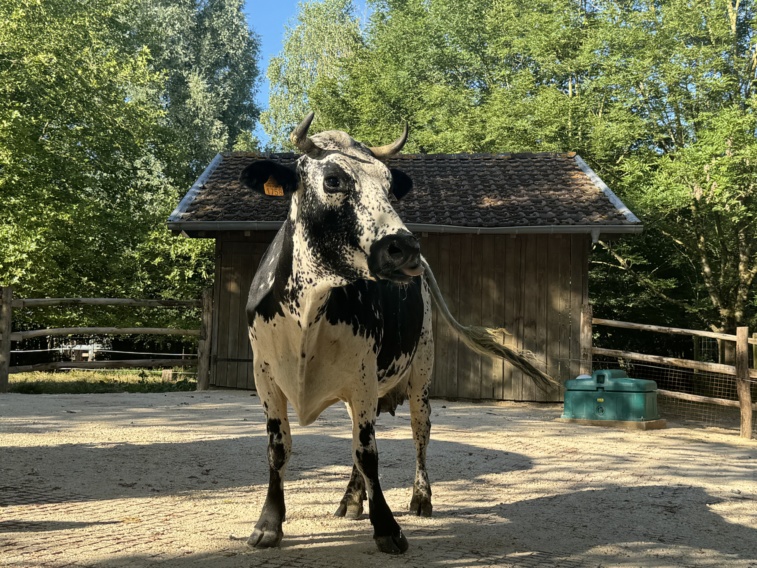
The Vosges cow is recognizable by its black-and-white piebald coat, often with irregular markings, and its slender, light-colored horns. Its most striking feature is its “spectacles”: a dark ring around its eyes that gives it an expressive and unique look.
Did you know?
This is a dual-purpose breed, meaning it is raised for both milk and meat. Its rich milk is used in particular to make the famous Munster cheese, a signature product of the region. Its meat, meanwhile, is prized for its tenderness and flavor.
Food
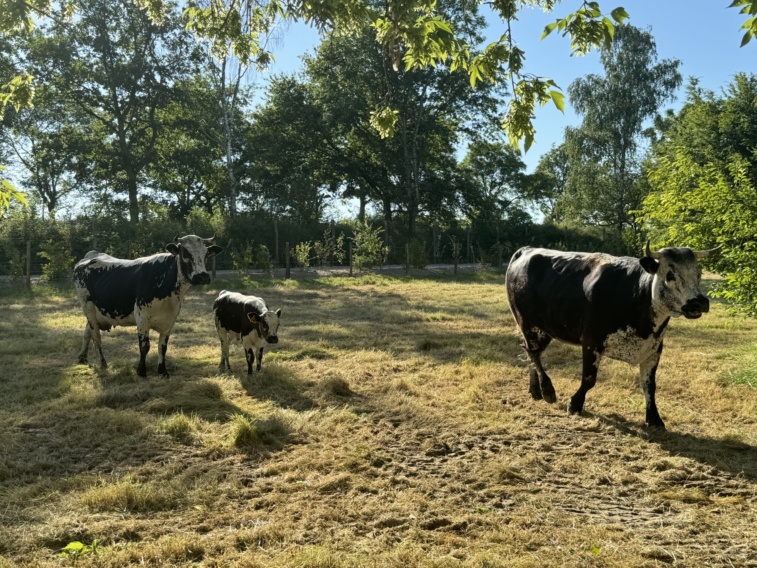
The Vosgienne cow feeds mainly on pasture. She feasts on grass, clover, and other plants found in mountain meadows. In winter, it is fed mainly hay and forage, and may sometimes receive a supplement of grains to maintain its energy during the colder months. This simple, natural diet gives its milk exceptional quality, which is particularly prized for the production of local cheeses.
Cp : Margaux Chatelain