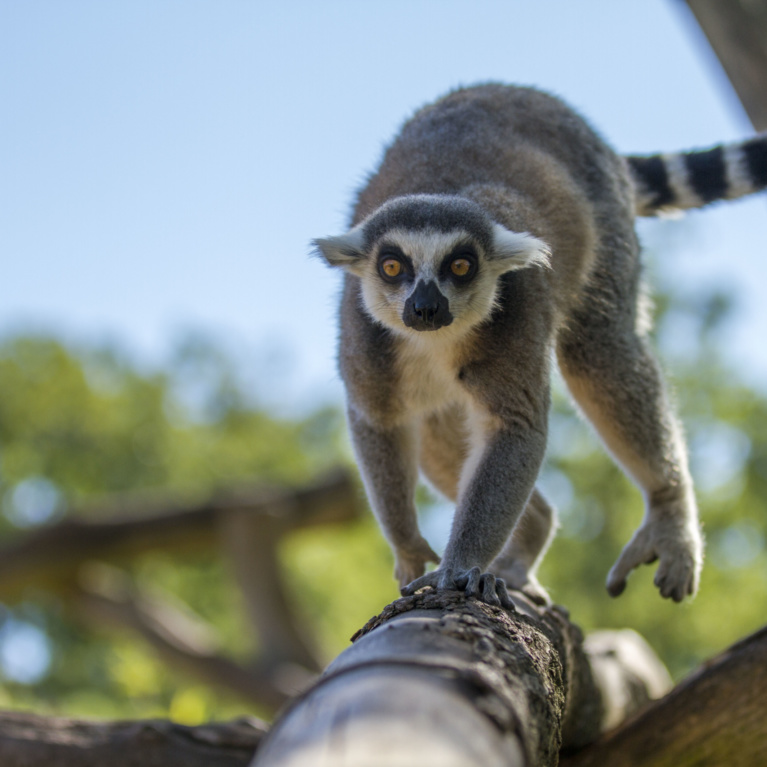
Ring-tailed Lemur
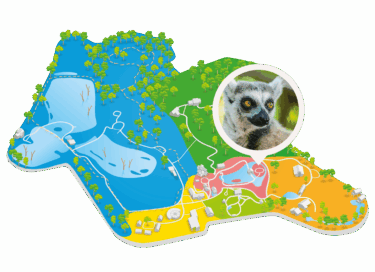
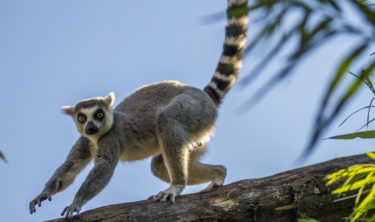
The most social of the lemurs
It emits a strong odor to mark its territory or assert dominance over other members of its group, especially during the breeding season.
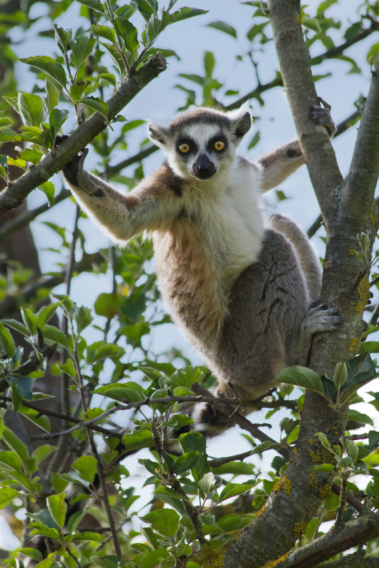
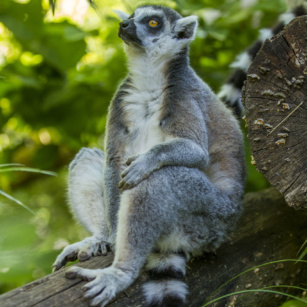
Although it is a good climber, it spends more time on the ground than in trees, searching for food and basking in the sun.
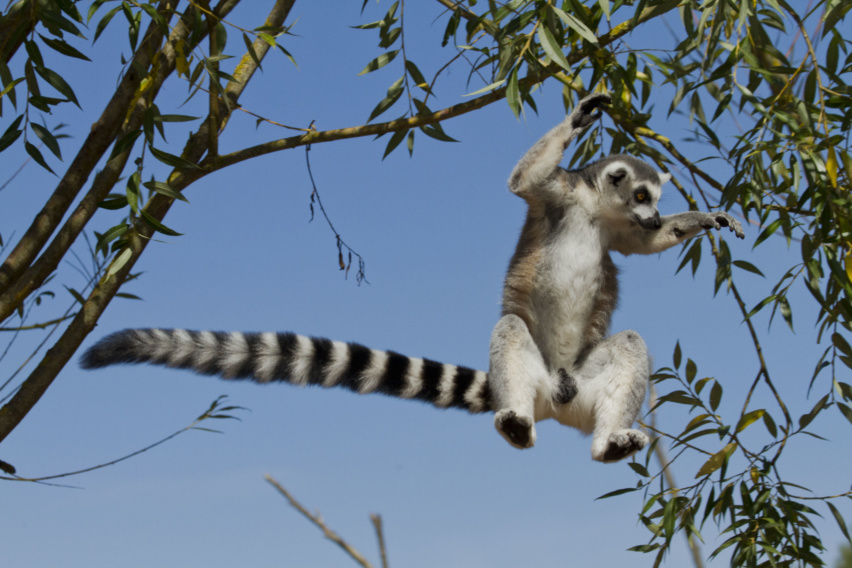
It uses its ringed tail to communicate with other ring-tailed lemurs.
IUCN status
The International Union for Conservation of Nature’s Red List of Threatened Species (IUCN)
Description
Lemur catta
Lemurs
2 to 3,5kg
body: 40 cm; tail: 65 cm
Rocky and scrubby areas of Madagascar
Endangered
25 to 30 years in captivity / 16 to 18 years in the wild
Threats
These endemic animals are found only in Madagascar, like most of the island’s flora and fauna. Deforestation (demand for exotic wood, slash-and-burn farming, etc.) and poaching (for their meat or as pets) are their main threats. The park supports the AEECL and Help Simus associations for the conservation and protection of lemurs in Madagascar, and the NGO Anne-Marie, Sœur du monde to support local communities.
Did you know?
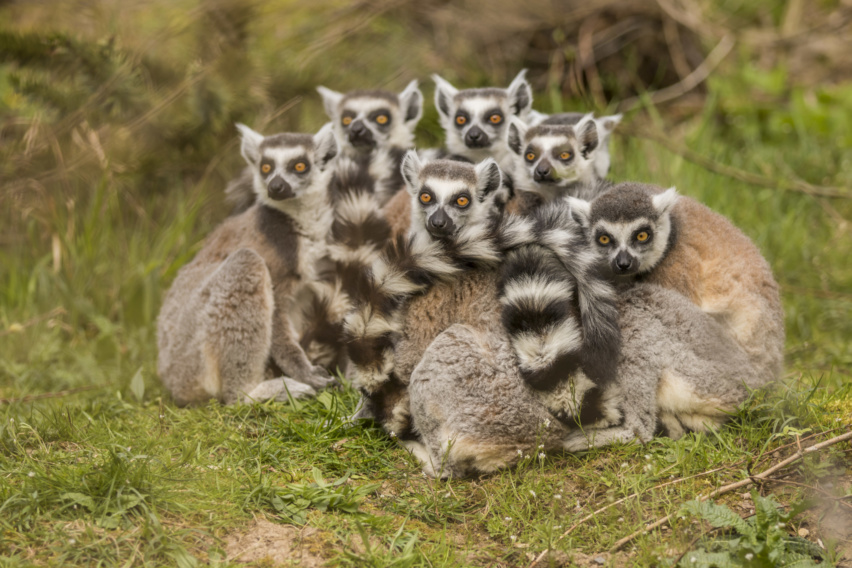
They travel in groups of up to 30 individuals gathered around adult females (a matriarchal species).
Food
Its diet is very varied: fruit, leaves, bark, small animals, insects, and soil.