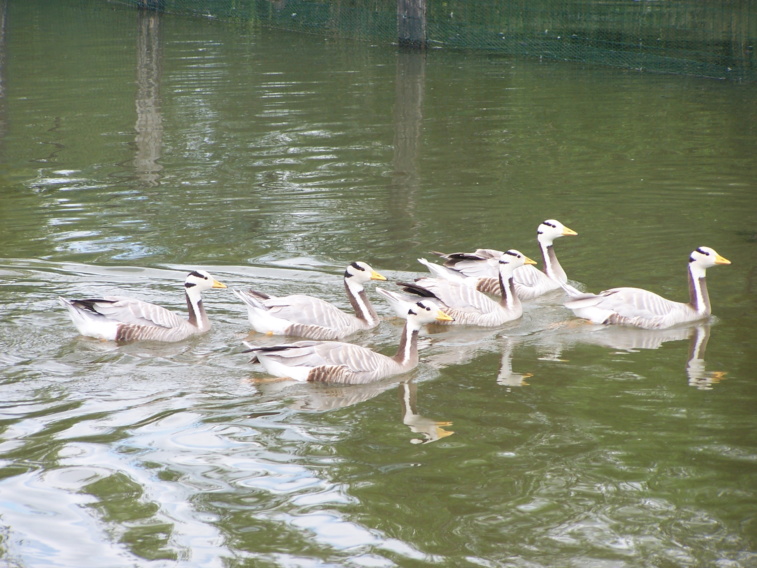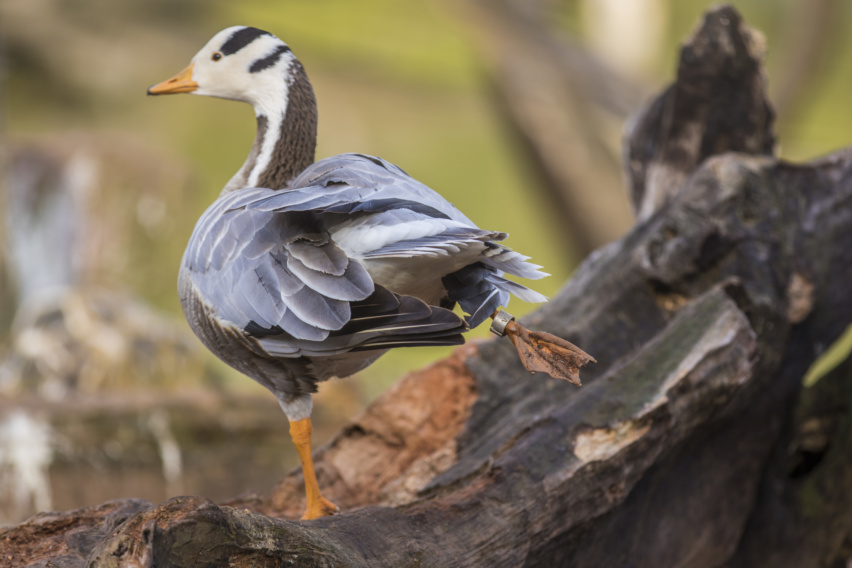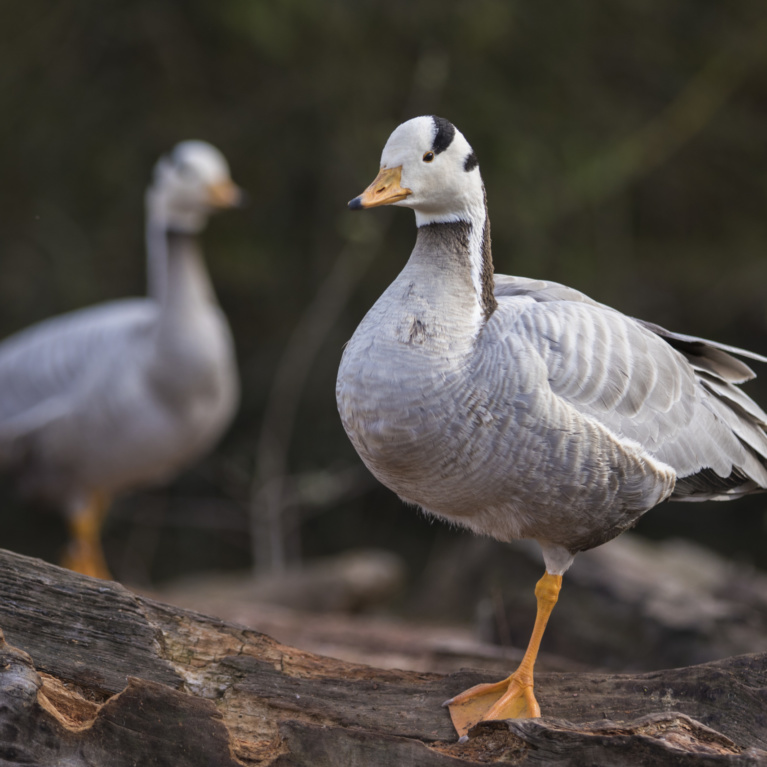
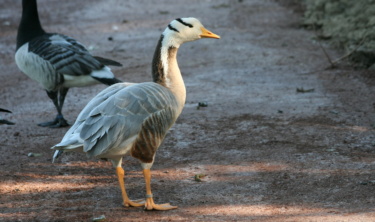
Bar-headed Goose
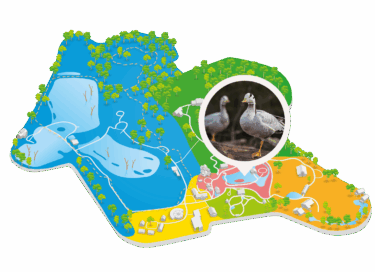
Journey to the Himalayas
In winter, it migrates to the lakes, rivers, and marshy plains of the Indian subcontinent (Bangladesh, Nepal, Pakistan, etc.) by flying over the Himalayas at impressive altitudes of 9,000 meters. It holds the record for the highest-altitude flight.
Once the goslings are born, both parents care for them. They watch over them, accompany them to the riverbanks, chase away intruders, and more. The goslings grow into their adult plumage after about two months. The young remain with their parents until the next breeding season.
IUCN status
The International Union for Conservation of Nature’s Red List of Threatened Species (IUCN)
Description
Anser indicus
Anatidae
2 to 3kg
70 to 76cm
Central Asia: Around the Lakes and Marshes
Least Concern
15 to 20 year
Did you know?
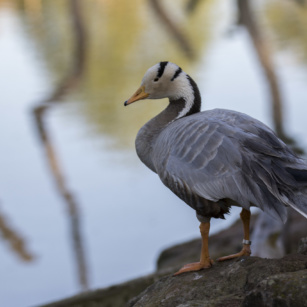
The population of the bar-headed goose is estimated to be between 52,000 and 62,000 individuals, showing a very slight decline. The causes of the decline are typical: hunting, habitat loss, egg collection, etc.
Food
It is primarily herbivorous, but may eat a few small insects.