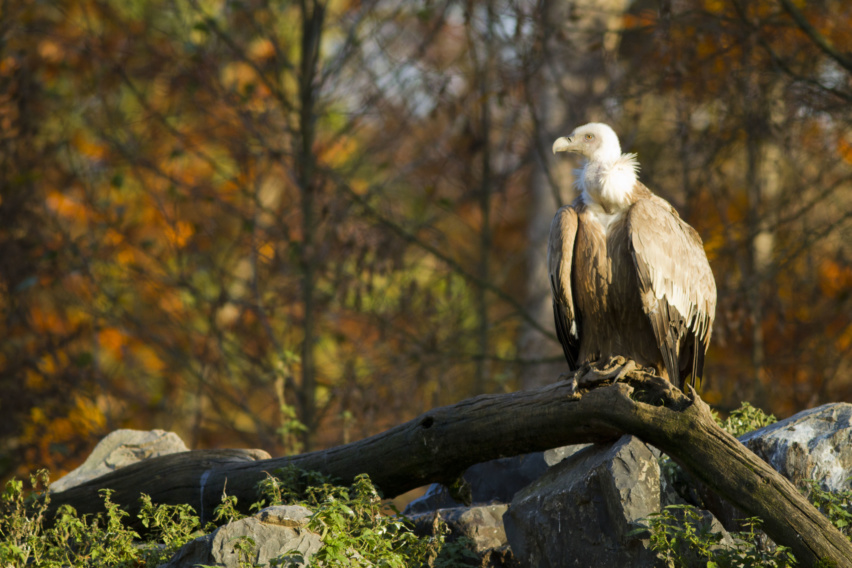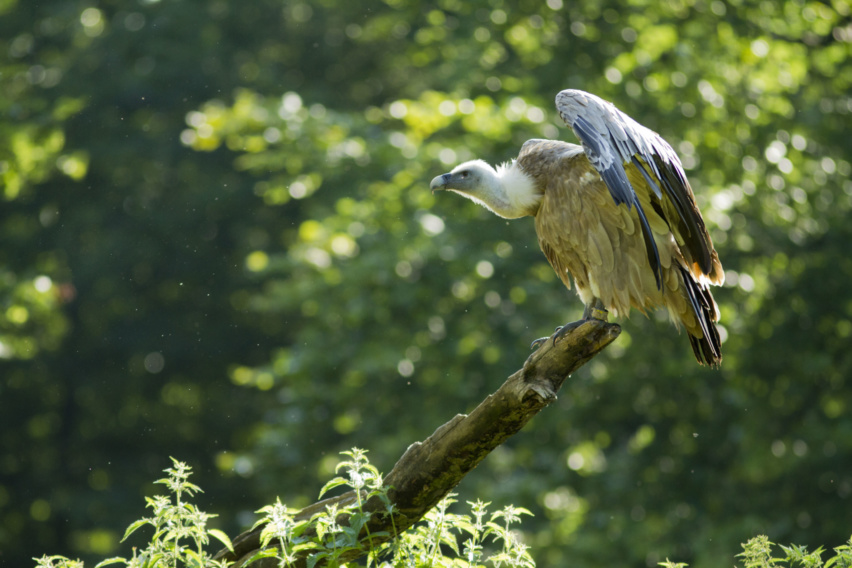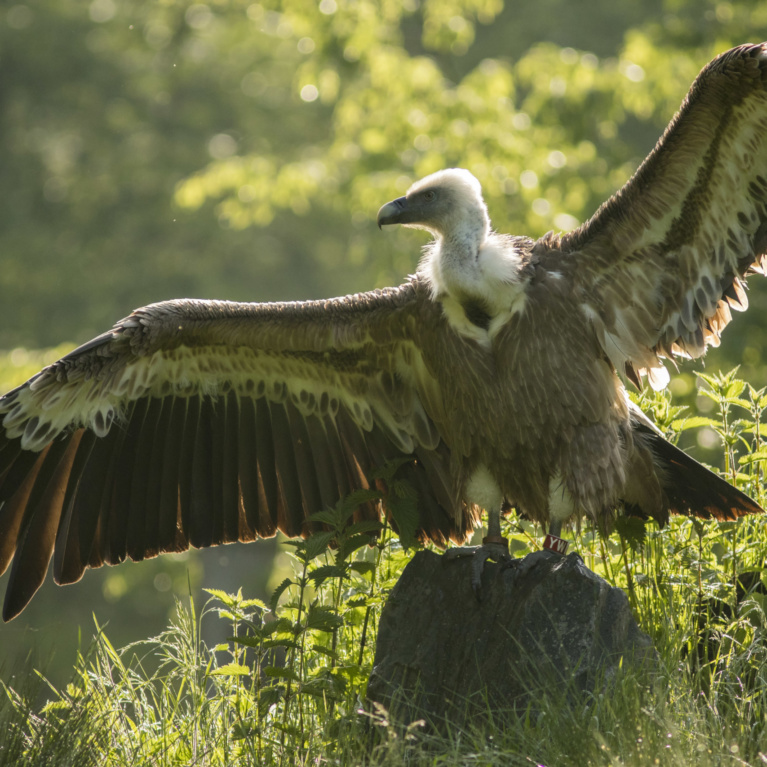
Griffon vulture
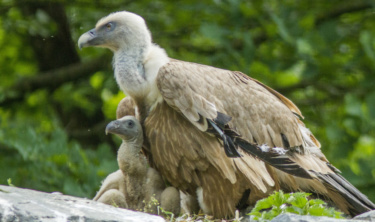
The Mountain Cleaner
The griffon vulture is a scavenger: it clears the mountains of the carcasses of wild and domestic animals, thereby preventing the spread of disease. It therefore often lives in areas where extensive livestock farming is practiced.
Its feet are not adapted for grasping but for walking. It has no true talons and therefore cannot capture prey or carry carrion. The carcass is thus consumed on the spot, bringing all the vultures together: this is the feeding frenzy.
It is a gregarious bird, forming colonies of up to 100 pairs, nesting on rocky ledges or steep cliffs. It searches for food by flying in groups over mountain pastures and other open areas.
IUCN Status
International Union for Conservation of Nature’s Status
Characteristics
Gyps fulvus
Accipitridae
7 to 12 kg
95 to 110 cm
Mountain
Least Concern
30 years
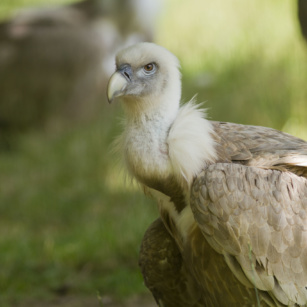
Extinction
The causes of this species’ extinction are primarily human-induced: the use of poison (if a vulture feeds on a poisoned animal, it will be poisoned as well), poaching, collisions with power lines or utility poles, and the prohibition on farmers leaving dead animals in the wild. A griffon vulture has already been spotted in Meuse. Indeed, the dispersal of young birds sometimes drives a few vultures as far as our region.
Food
It feeds on carrion.